My second big work event of the year was in Barcelona for Mobile World Congress (MWC), the biggest event dedicated to the mobile phone and cellular industry. I have never been to the event before, and it has certainly been on the list for a long time. This was the 20th anniversary of the event being in Barcelona, and any excuse is a good excuse to spend time in that fabulous city. I had a little bit of time to explore, but mainly it was full days in the conference center.
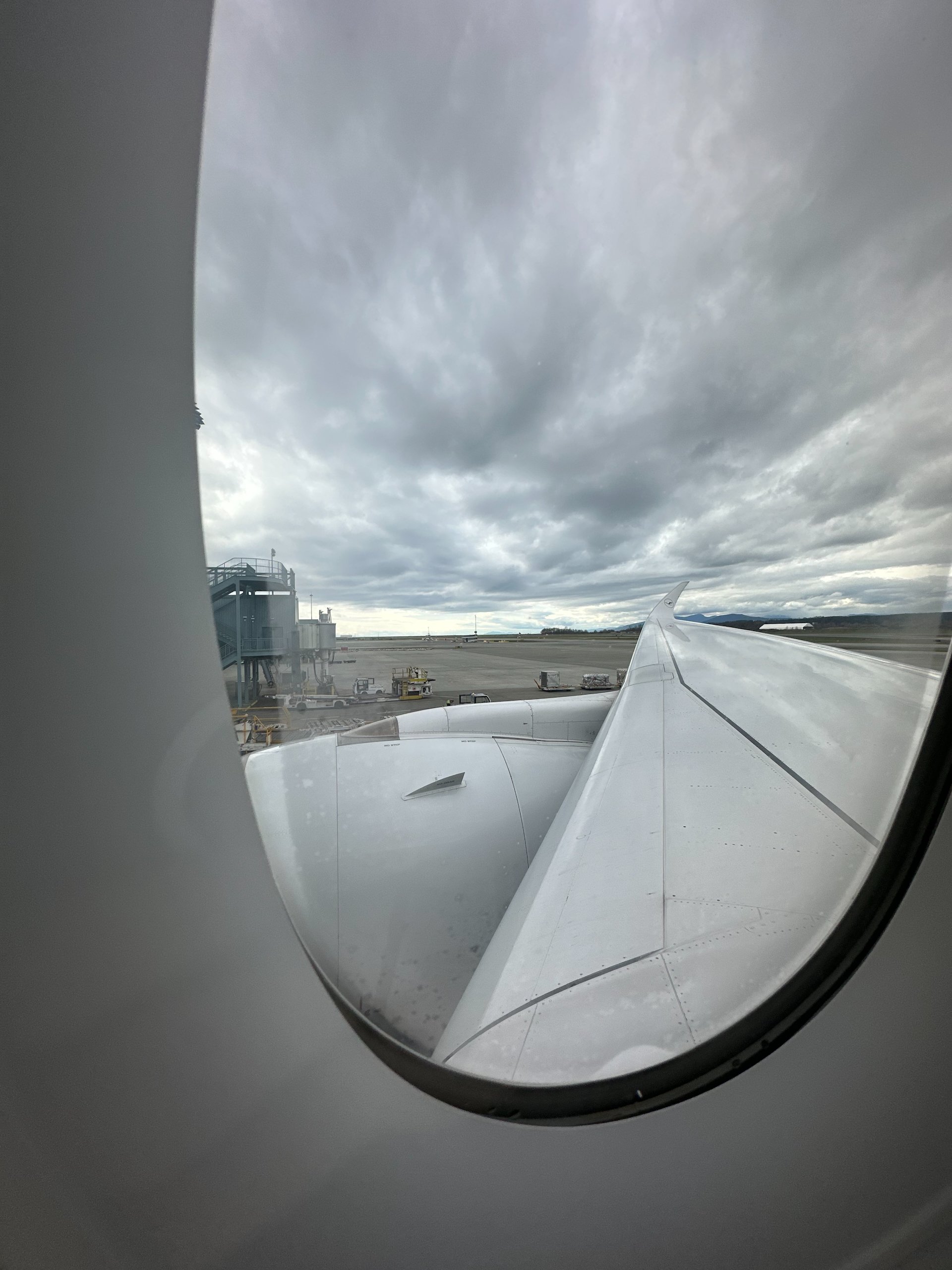
It was time to head to Europe - it had been a while.
The 2026 MWC in Barcelona concluded as a landmark event, celebrating its 20th anniversary in the city. Running from March 2 to March 5, the congress served as a global stage for the next generation of mobile innovation. The event remained one of the largest tech gatherings in the world. The total exhibition space at MWC 2026 covered approximately 240,000 square meters, which is roughly 2.58 million square feet. To put that into perspective, that’s equivalent to about 45 football fields of tech, gadgets, and networking.
Total Visitors: Approximately 105,000 attendees, representing a slight dip from 2025 but still showcasing a massive global interest.
Global Reach: Participants traveled from over 207 countries and territories.
Industry Presence: The venue hosted 2,900 exhibitors and sponsors, with more than 1,700 speakers across the four-day program.
High-Profile Guests: Notable figures included King Felipe VI of Spain, who opened the event, and actor Aaron Paul, who spoke on a panel regarding digital well-being.
The primary focus shifted from "faster internet" (the 5G/6G transition) to Intelligent Connectivity. The industry is now prioritizing "Agentic AI"—devices and networks that don’t just process data but take autonomous actions to assist the user. AI was everywhere at the event, and every vendor it seemed was pushing the topic.
I left Vancouver on Friday night, which got me into Barcelona in the early afternoon. I had connected through Munich, which added a couple of hours of layover. The flight was fine, but I did not sleep at all on the way over. I did fall asleep for an hour or two on the flight from Munich to Barcelona, but it definitely was not enough.
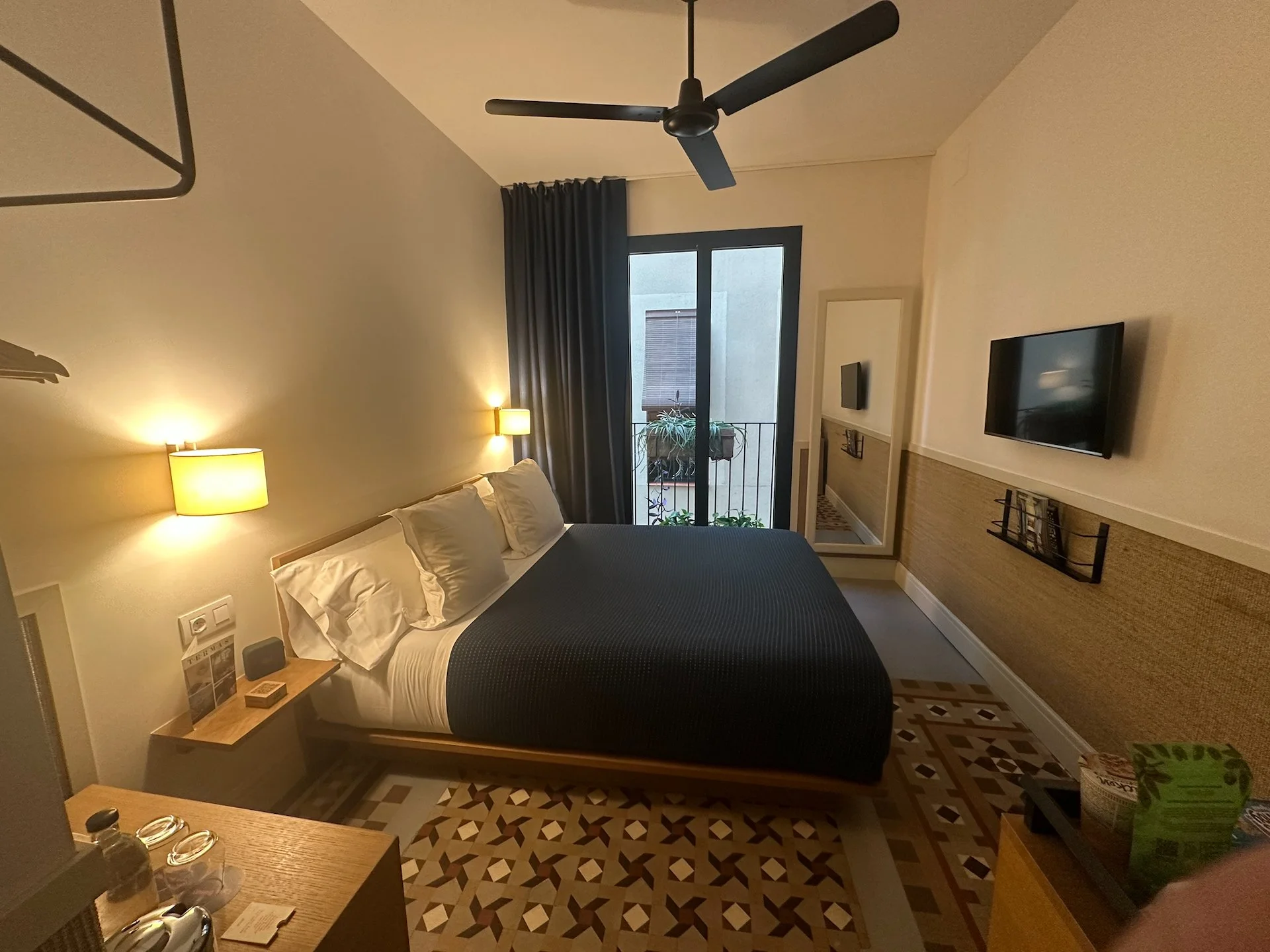
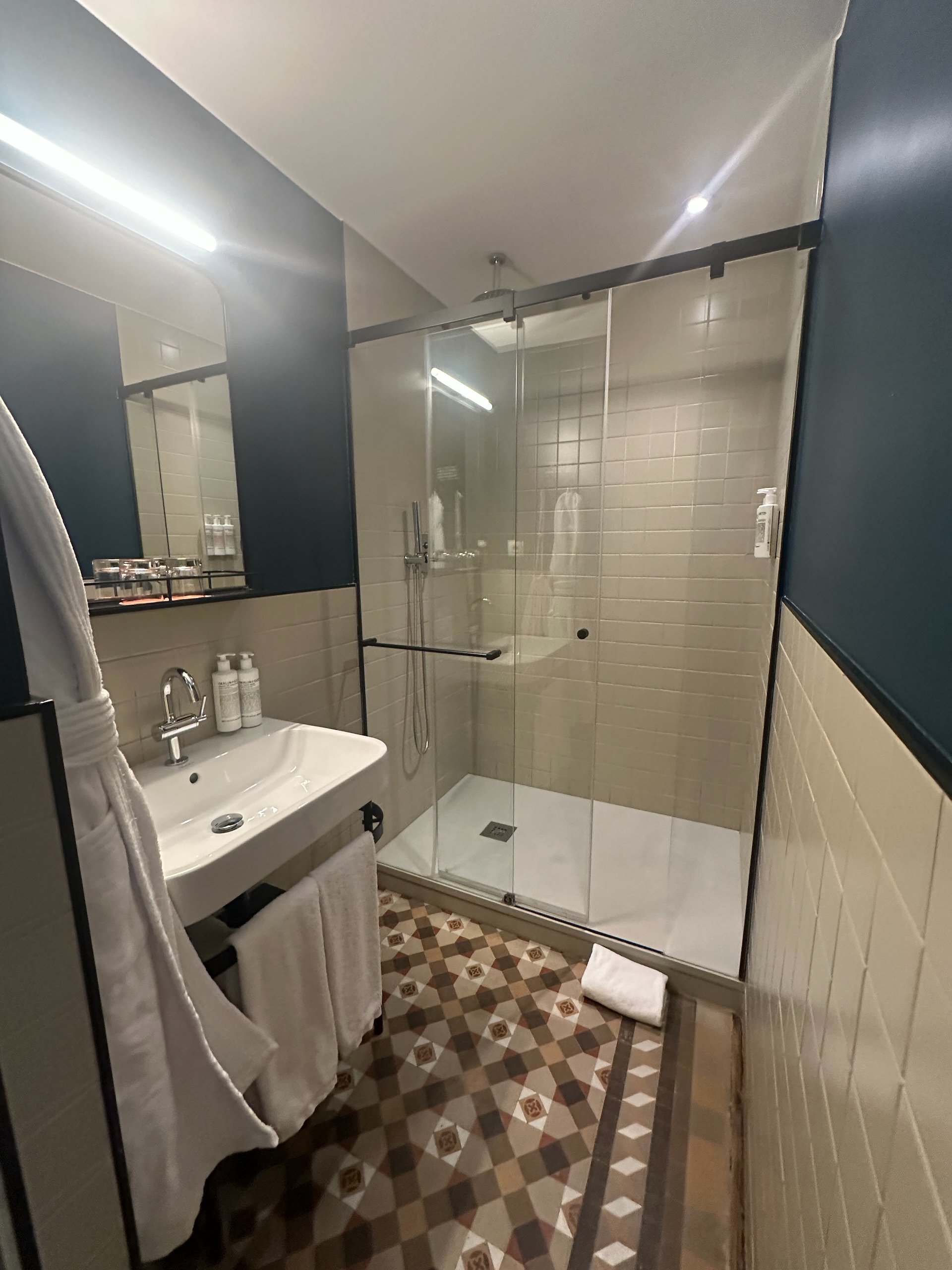
I took a taxi from the airport to the hotel, which was pretty well situated in the older part of the city. We had left booking hotels pretty late, and so we ended up in more of tourist hotel. It was a nice enough hotel, and if Justine and I had been travelling for fun it would have been fine. But travelling for work, it wasn’t great as there was no work space in the room.
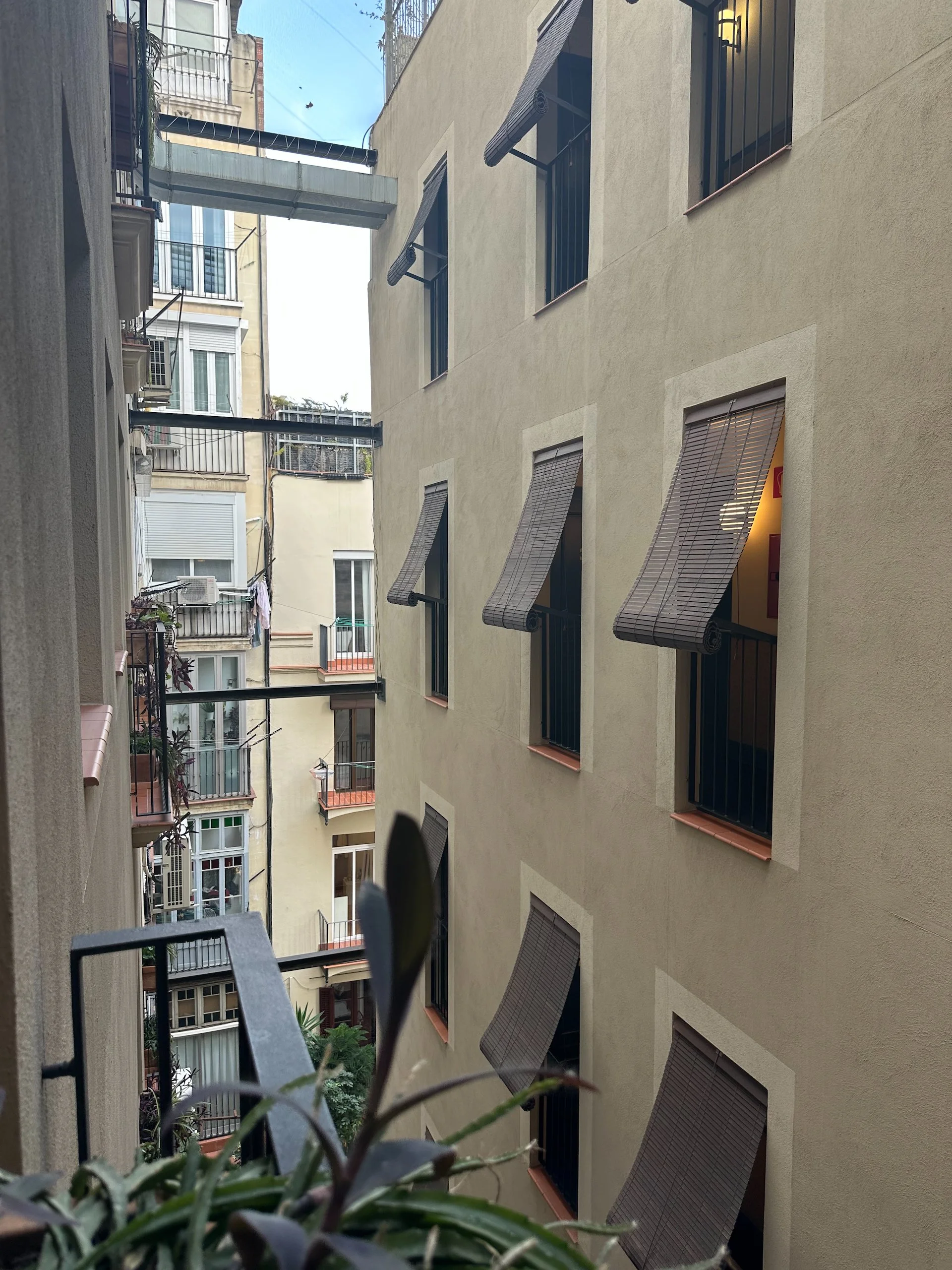
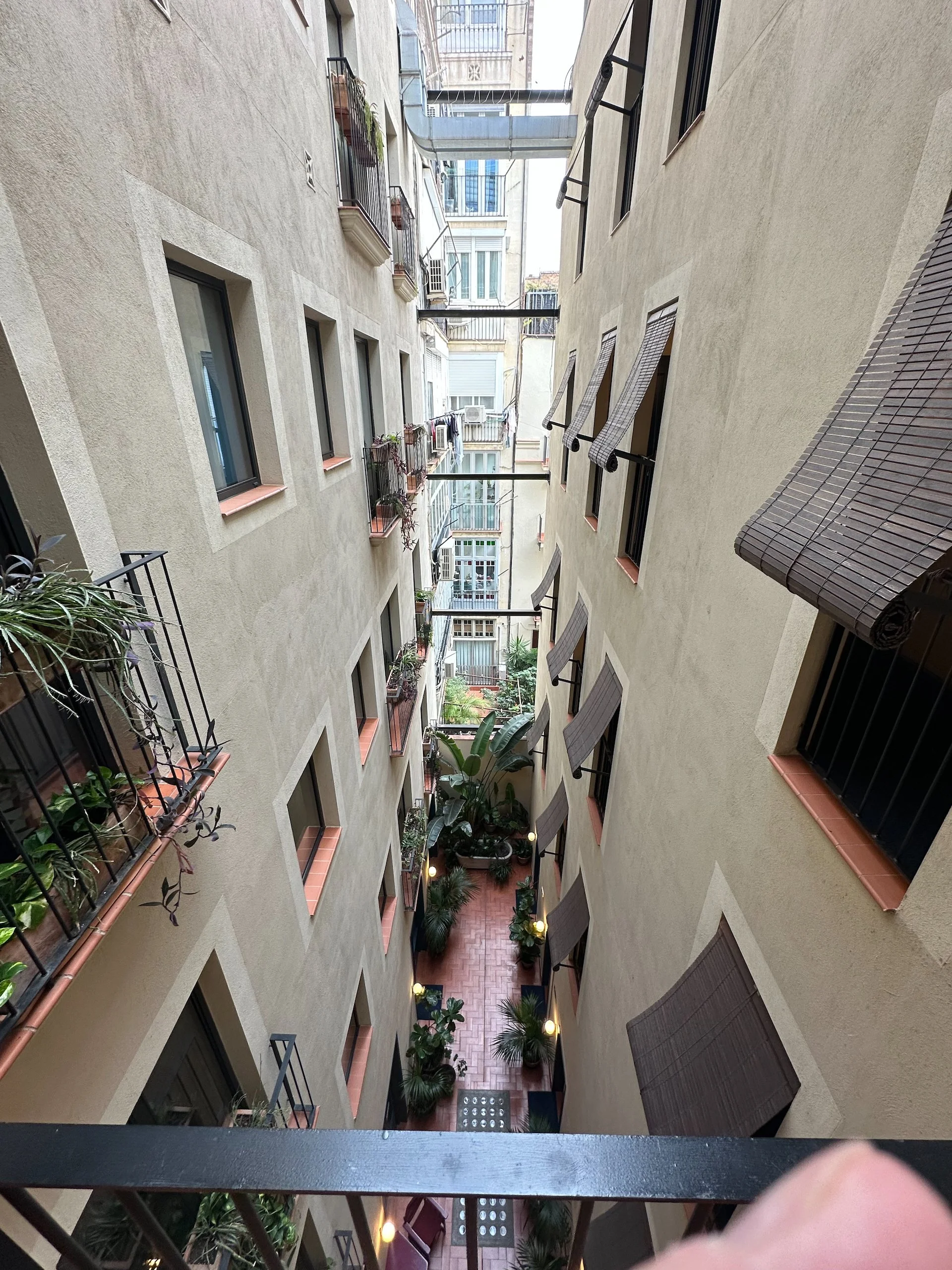
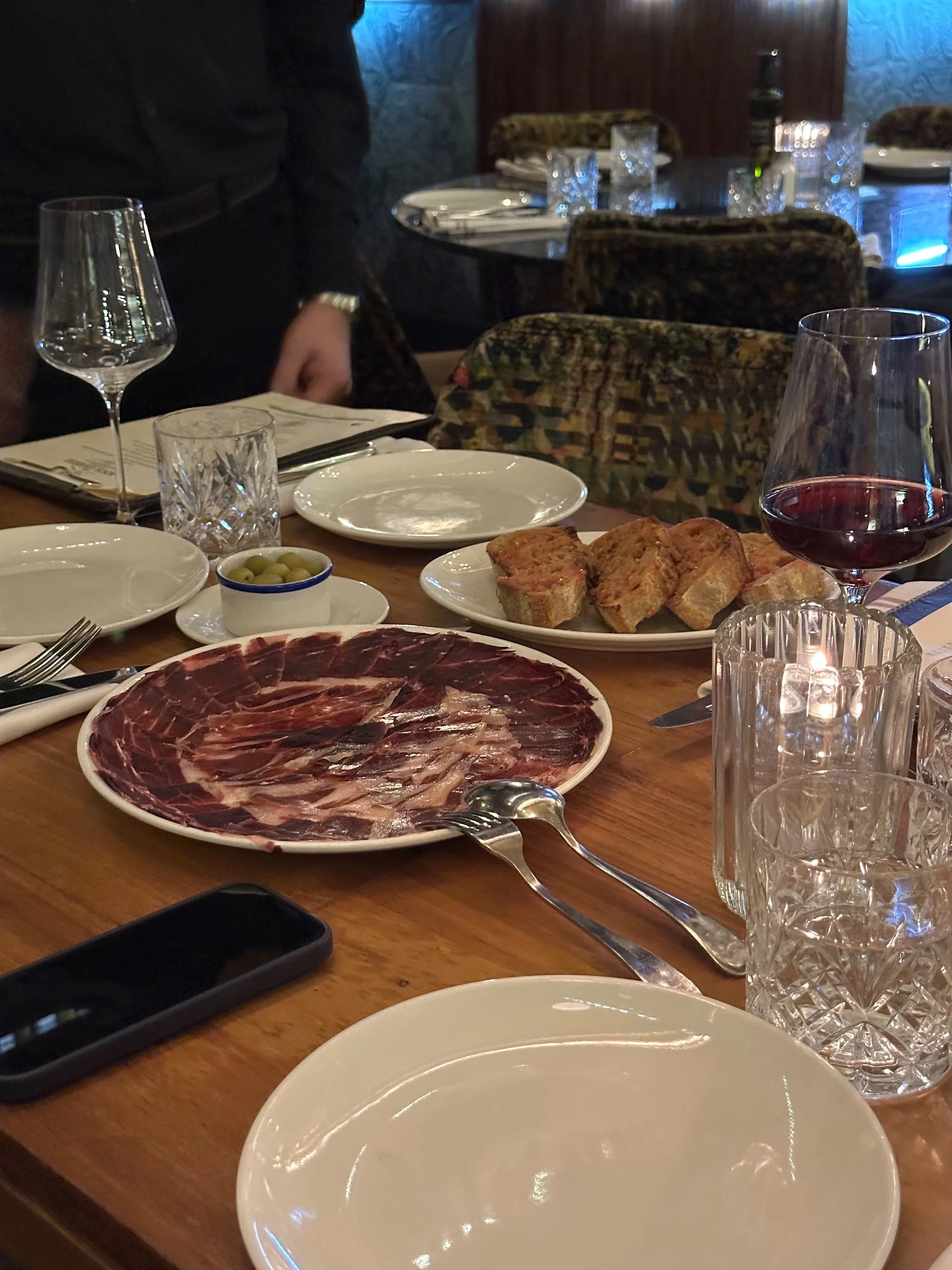
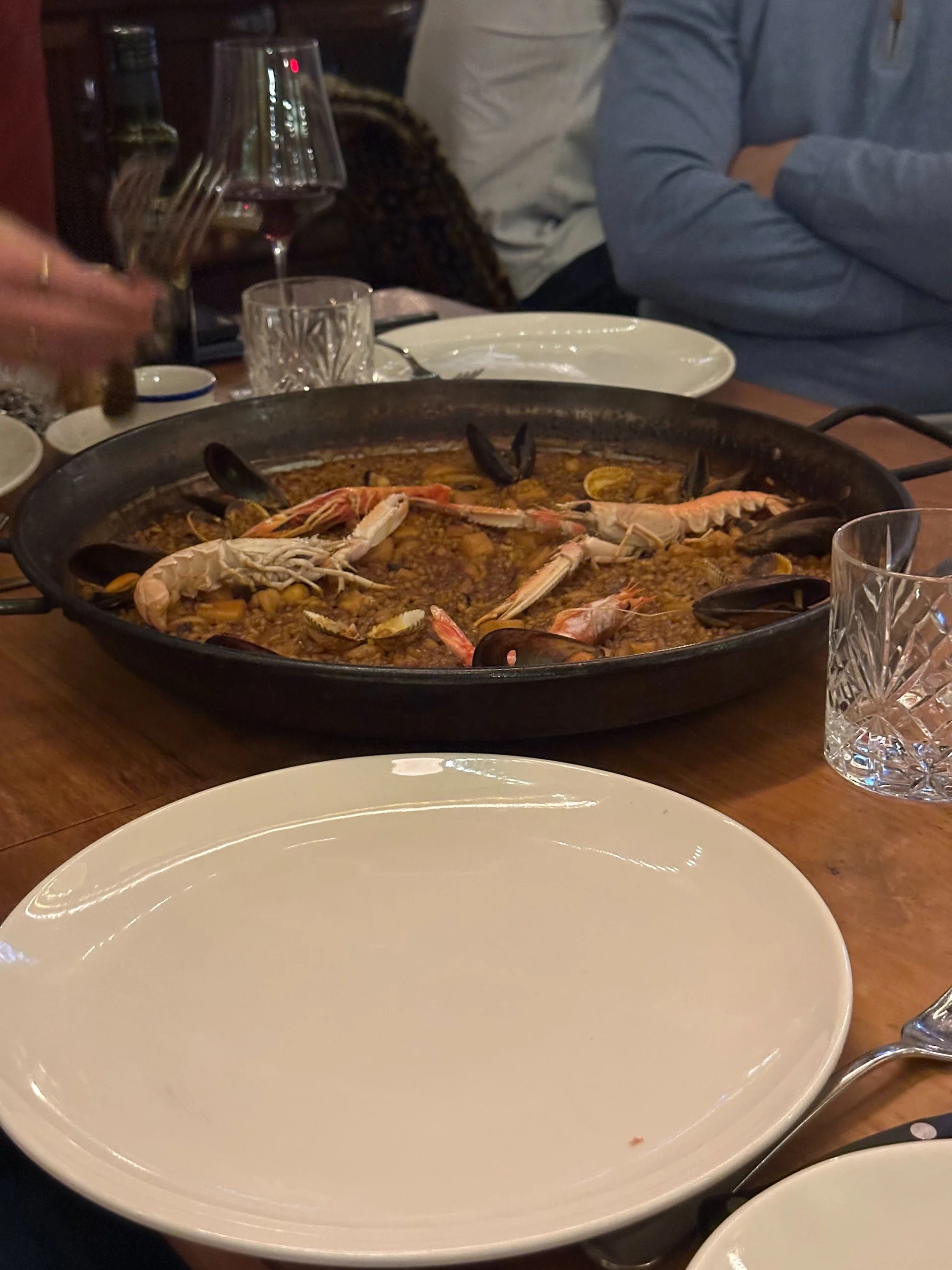
The reason I had to arrive on Saturday, was that we were meeting AT&T (one of our biggest customers) for dinner. I had a couple of hours to unpack, have a shower and get myself organized before I was meeting the team to walk over to dinner. The 20-minute walk was definitely needed and helped me to wake up. Graeme had picked a pretty nice restaurant, and we had a really fun evening. The restaurant had a pretty funky bar upstairs, and so we continued the festivities after dinner. It ended up being a pretty late night, and I was surprised how well did given the lack of sleep on the trip over.
The location of the restaurant was right near one of Gaudi’s famous houses, Casa Batllo, which is perhaps Gaudí's most famous remodel, often called the "House of Bones" due to its skeletal balconies and iridescent, scale-like facade. I’ll do the deep dive on Barcelona’s most famous son a little later on. At night, the place looked great and so I took a few pics before heading back to the hotel to sleep!
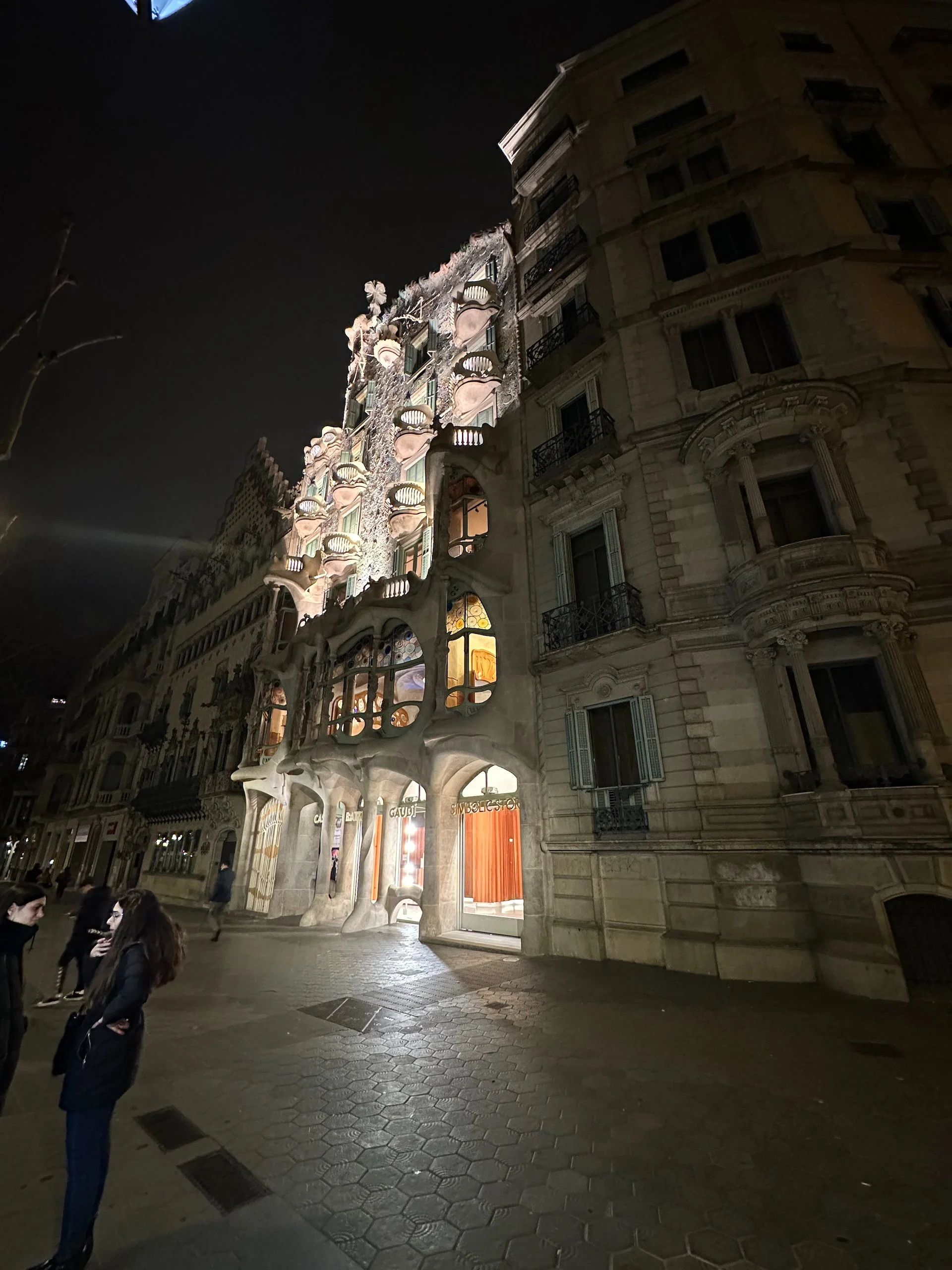
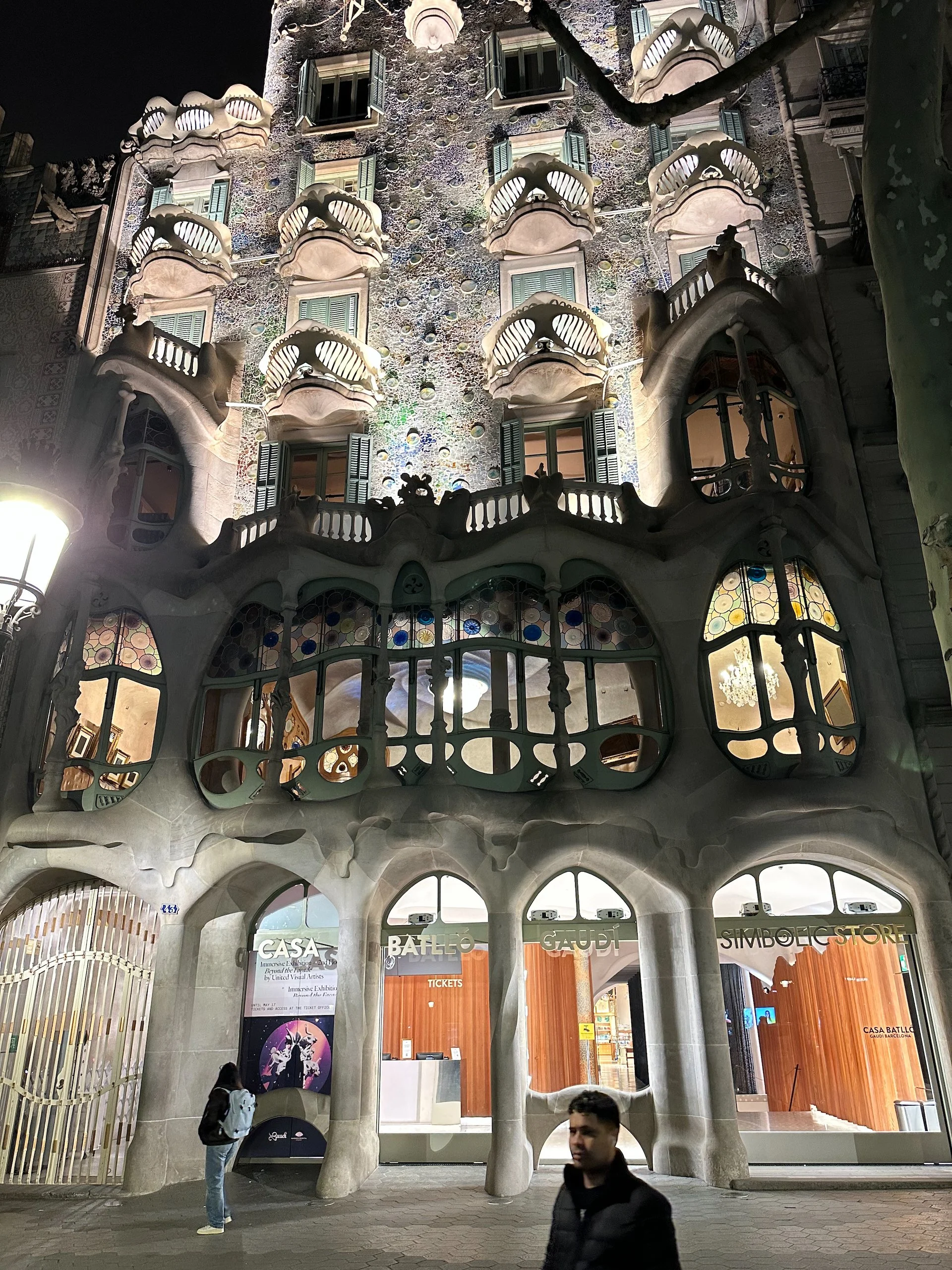
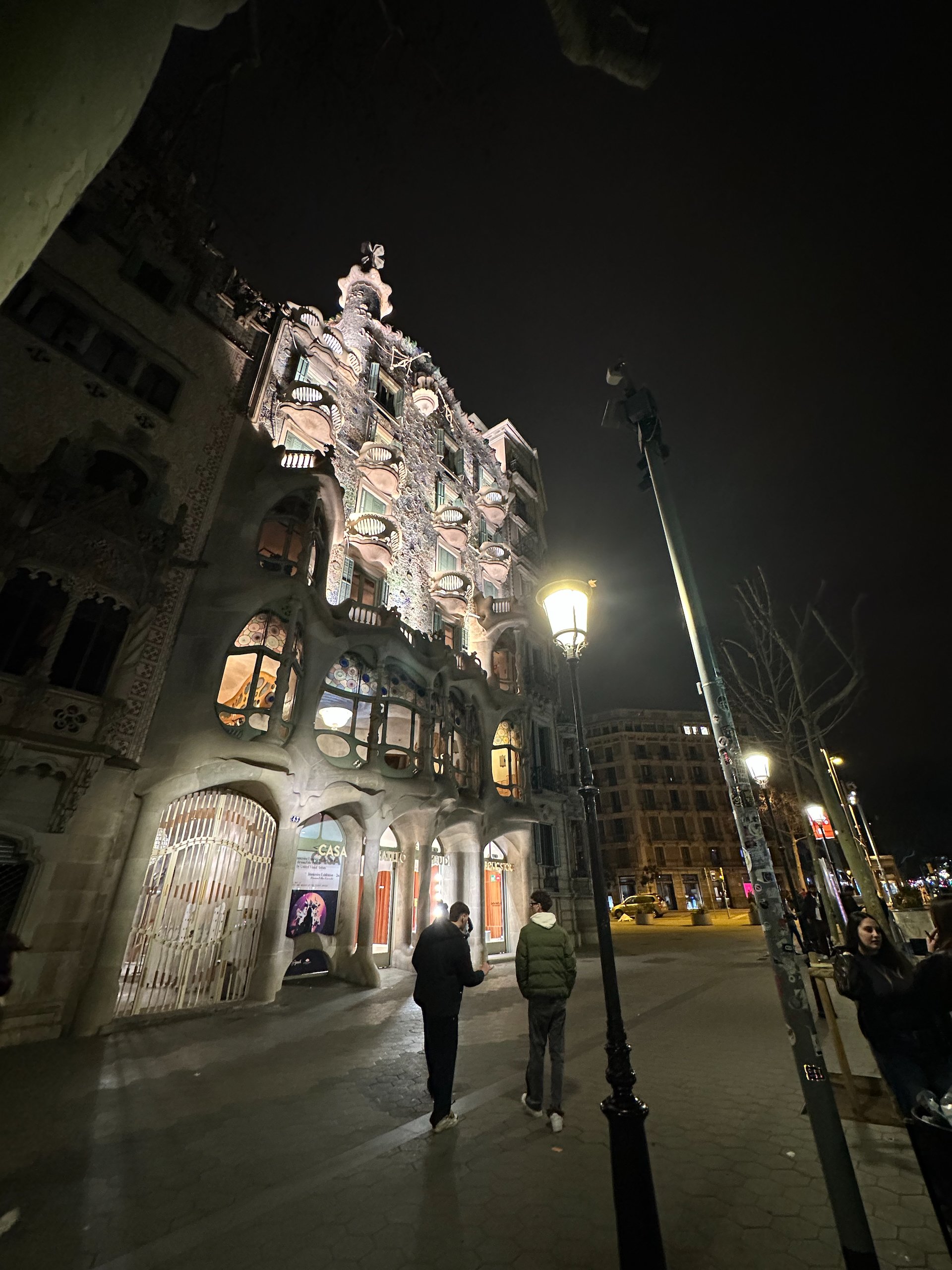
Sunday I had the day to myself, so it was time to explore! The last time I had been in Barcelona was in 202 before COVID, so I wanted to see what had changed. As Barcelona is really about Gaudi, I thought a nice walking tour to hit the highlights of his amazing architecture was the right thing to do.
His surreal, organic, and breathtakingly imaginative works are some of my favorite, and I love seeing them when I visit. Antoni Gaudí is often referred to as "God's Architect," and he was the primary figure of Catalan Modernism, and his influence is woven into the very DNA of Barcelona. Gaudí’s style is instantly recognizable because it defies traditional straight lines. Instead, he looked to nature for inspiration, mimicking the curves of trees, the patterns of honeycomb, and the anatomy of skeletons. His buildings don’t just sit on a street; they seem to grow out of the earth.
The Crown Jewels of His Work
While he designed many structures, three stand out as must-sees. I didn’t have time for Park Guell, which can be a day in and of itself.
La Sagrada Família: His unfinished masterpiece and perhaps the most famous church in the world. Its forest-like interior columns and towering spires create a sense of awe that photos simply cannot capture.
Park Güell: A colorful wonderland originally intended as a housing estate. It’s now a public park famous for its winding gingerbread-style houses, the iconic mosaic lizard, and panoramic views of the Mediterranean.
The "Houses" (Casa Batlló and La Pedrera): Located on the grand Passeig de Gràcia, these residences look like they’ve been sculpted from waves or bones. Casa Batlló is known for its iridescent facade and "dragon-back" roof, while La Pedrera (Casa Milà) is celebrated for its undulating stone exterior and surreal rooftop chimneys.
Seven of Gaudí’s works are designated UNESCO World Heritage Sites, a testament to his genius. When exploring Barcelona, his architecture provides a bridge between the historical Gothic Quarter and the modern energy of the modern city. Walking through his spaces feels like stepping inside a dream—a perfect blend of religious devotion, mathematical precision, and pure artistic fantasy.
This was the map of my main walk. I hit a lot of the highlights before stopping for brunch in the early afternoon.
My day started a little later than planned, around 9:30. I slept in a lot later than normal, so I was worried that I had missed out on a good part of the day. My first stop was to check out the progress on Sagrada Familia, easily the most beautiful church on the planet. They have been at work on this magnificent building for over 100 years and are getting close to finishing it! All of the main towers are now built and the work is primarily in the artistic details to finally deliver on his vision. It’s supposed to be completed in 2035. I had left it too late to get a ticket to go inside, so I was resigned to walking around the building and checking everything out from a distance. It’s incredible.
I think this facade is my favorite. You can see where they are cleaning the original structure, cleaning off 100 years of grime.
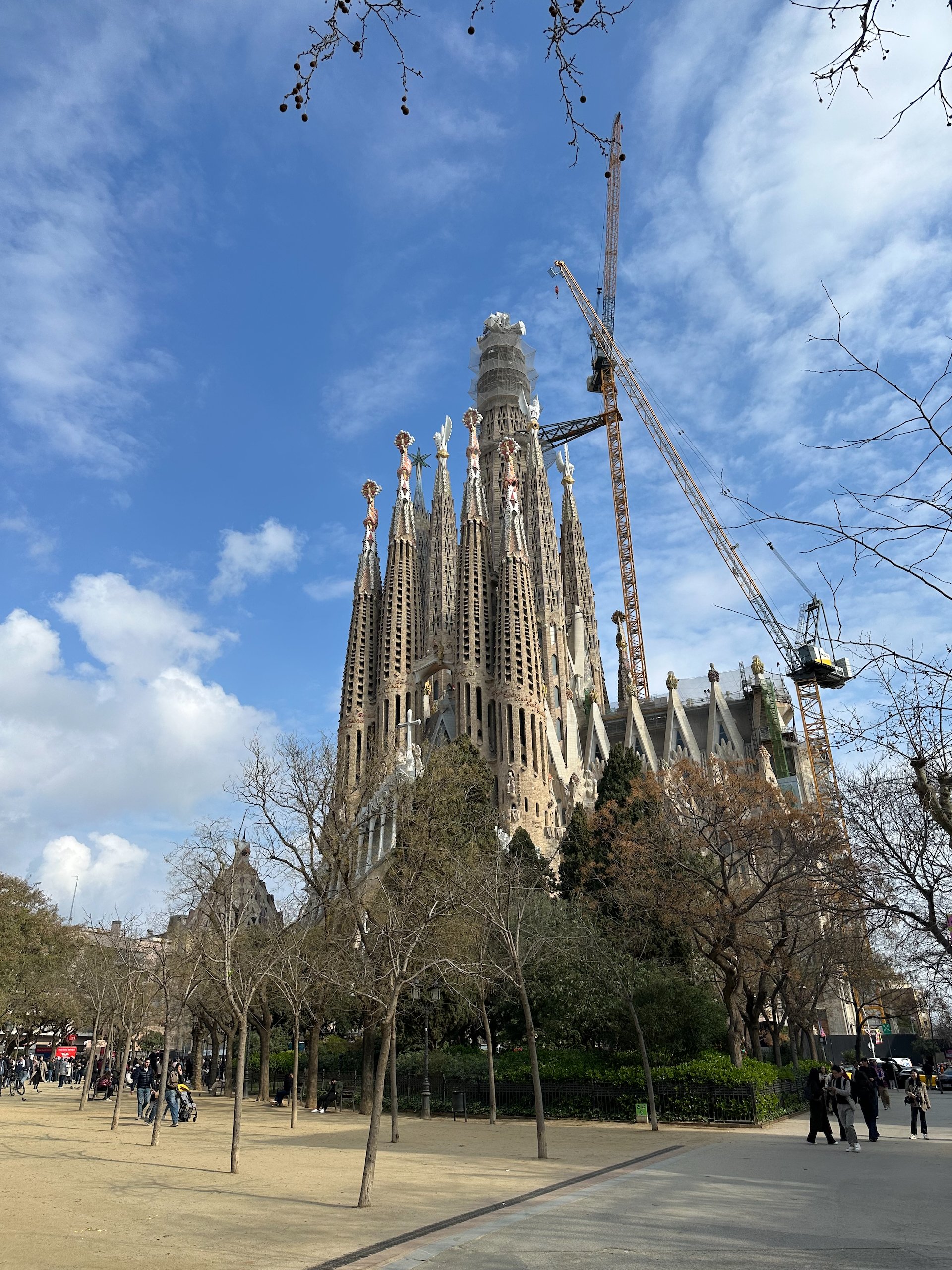
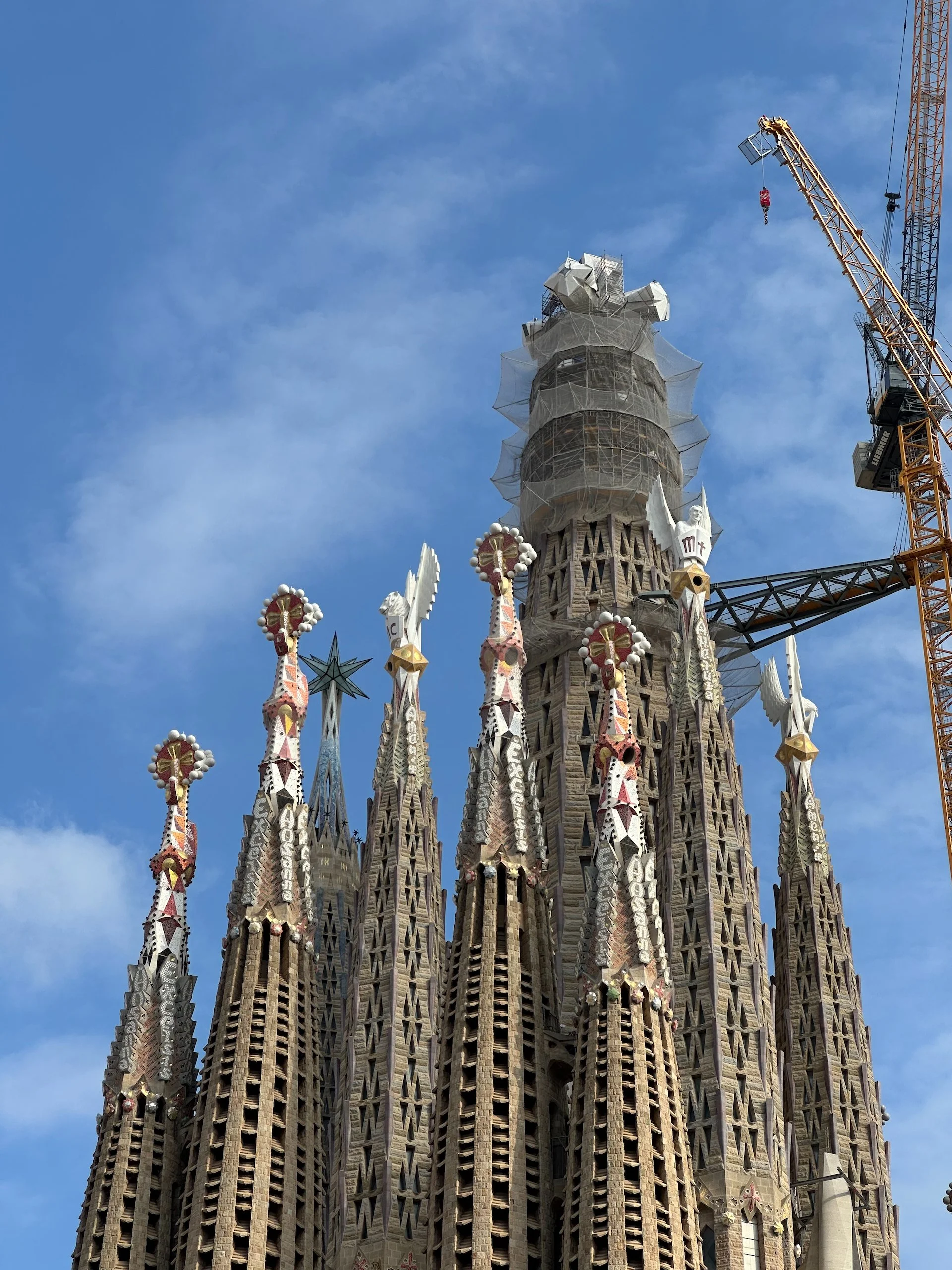
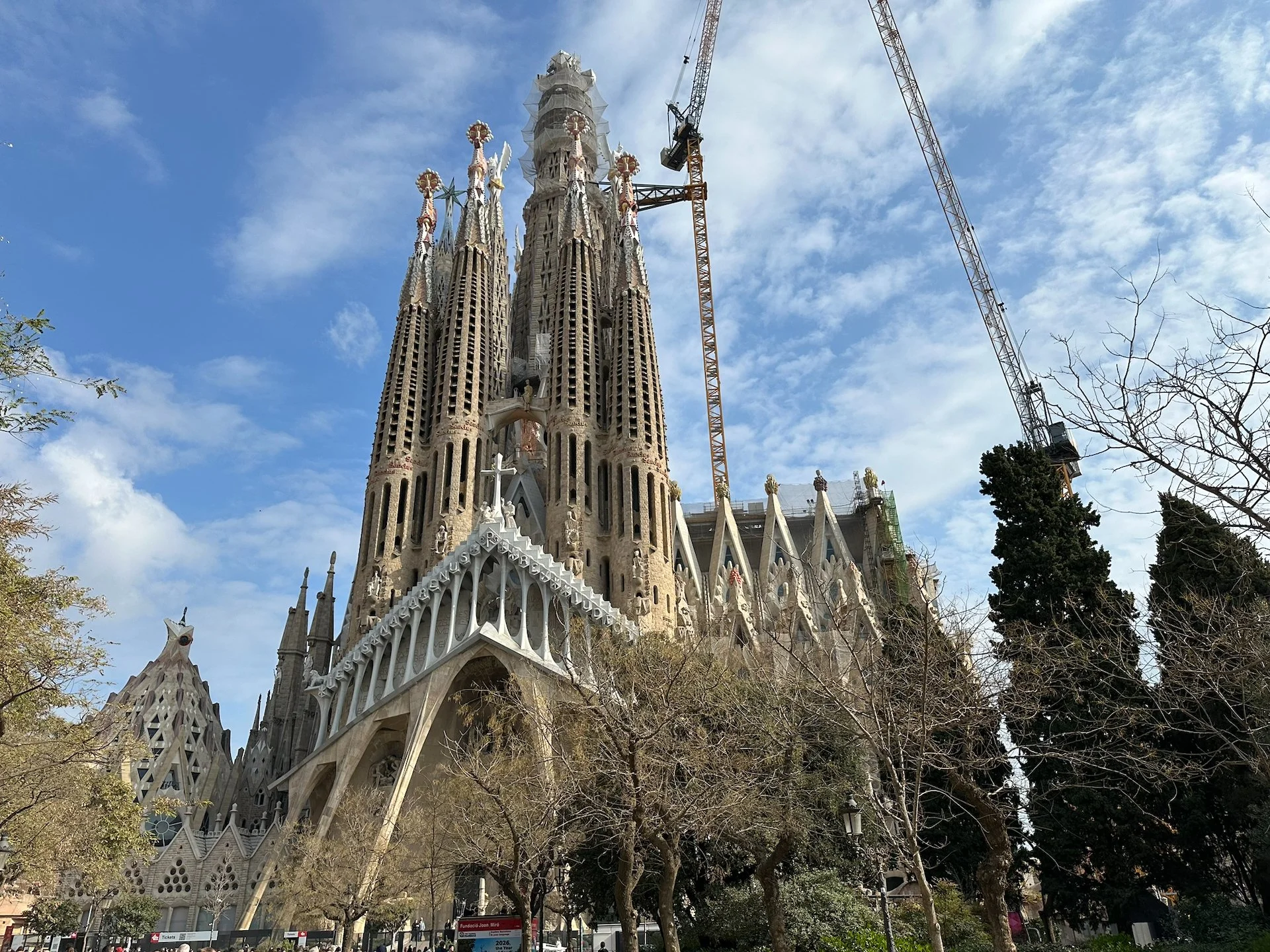
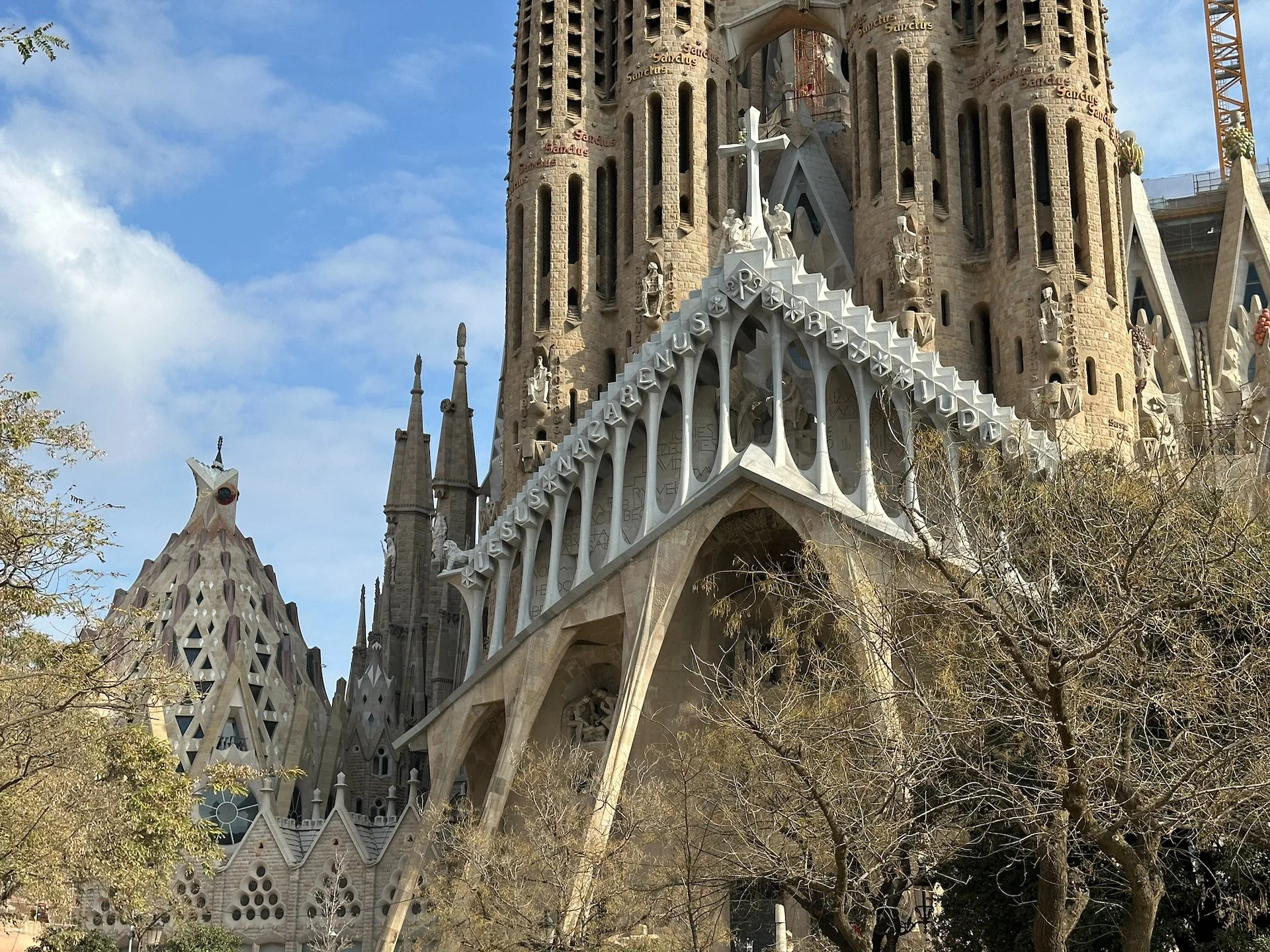
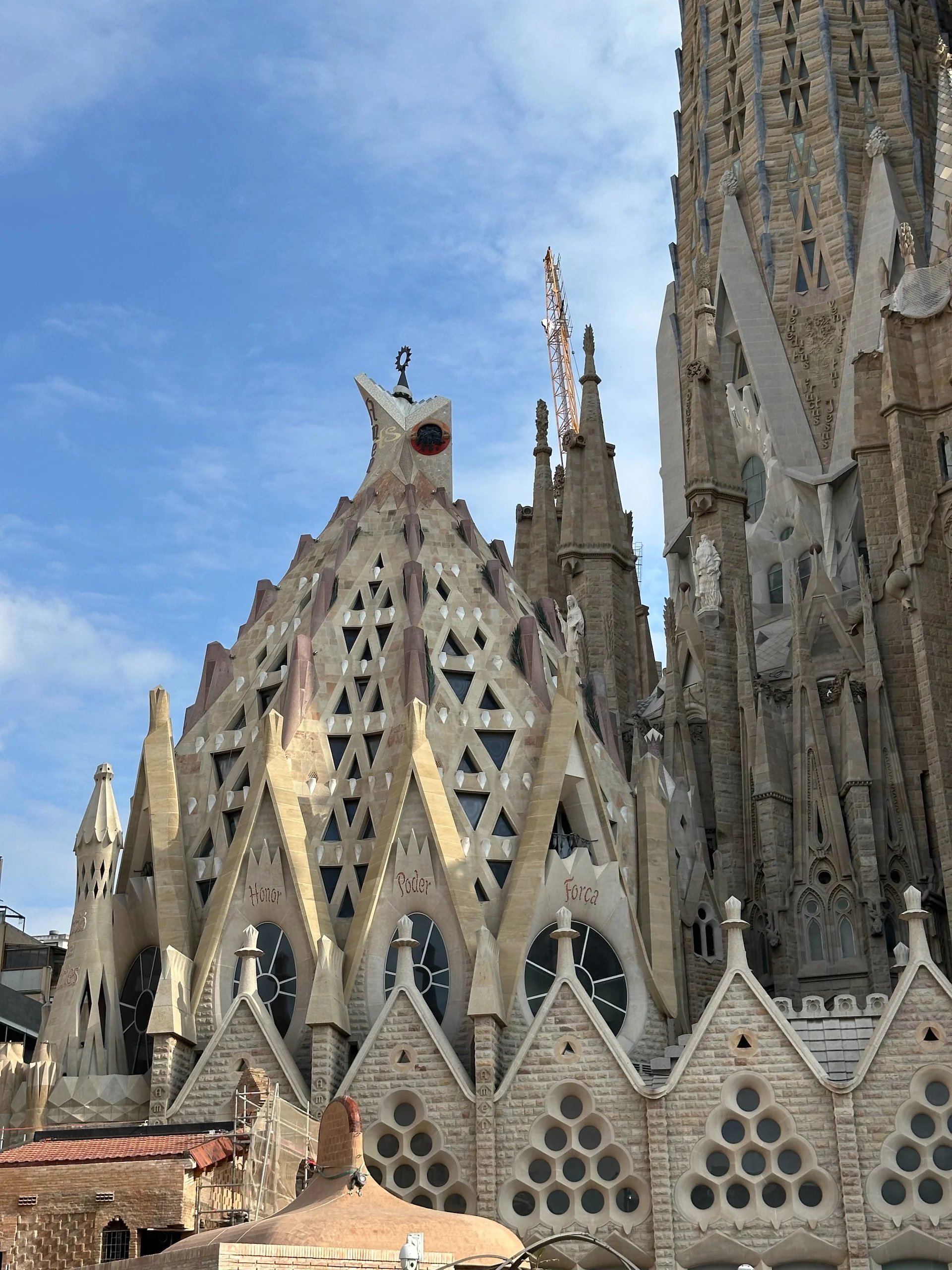
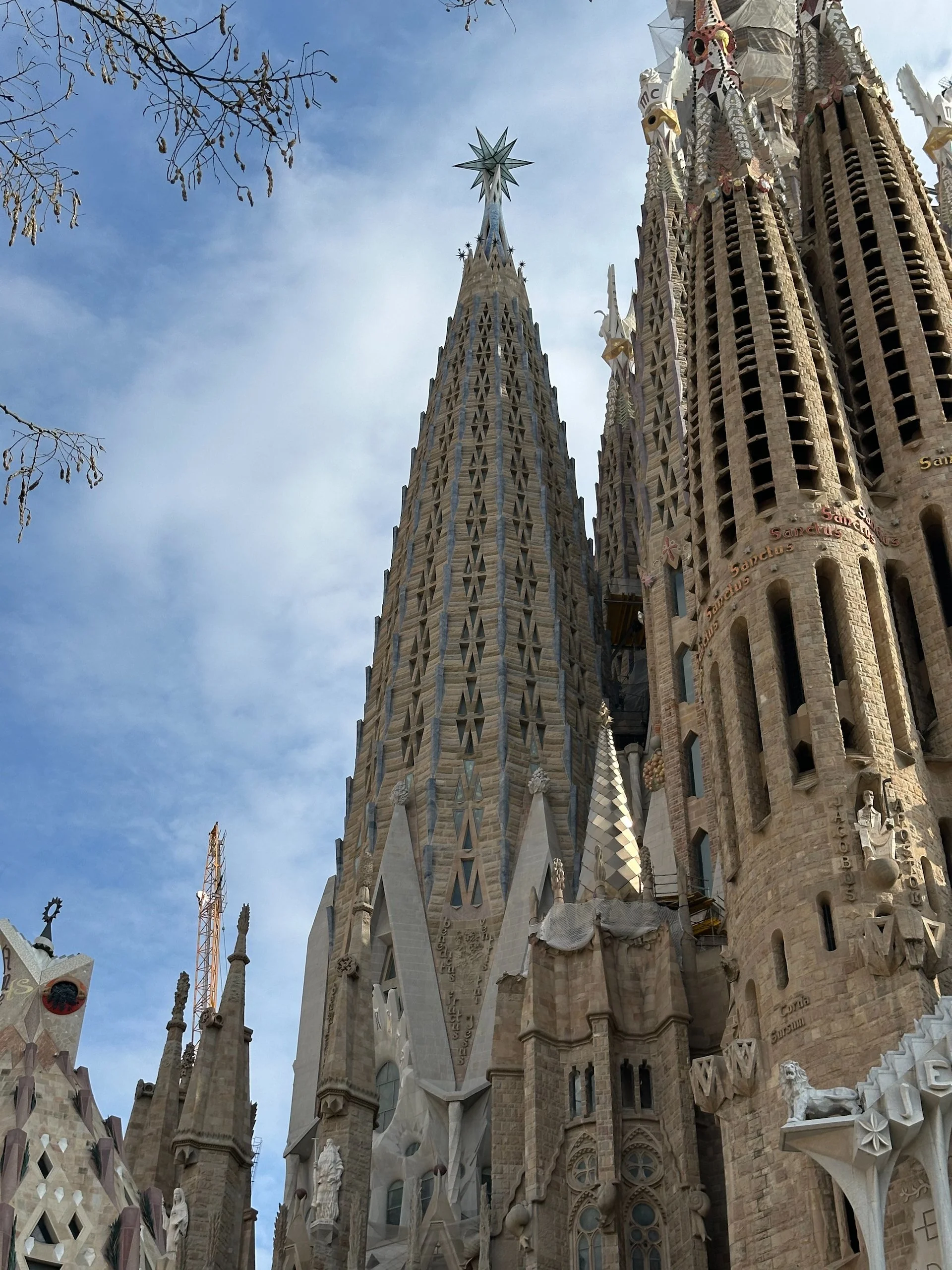
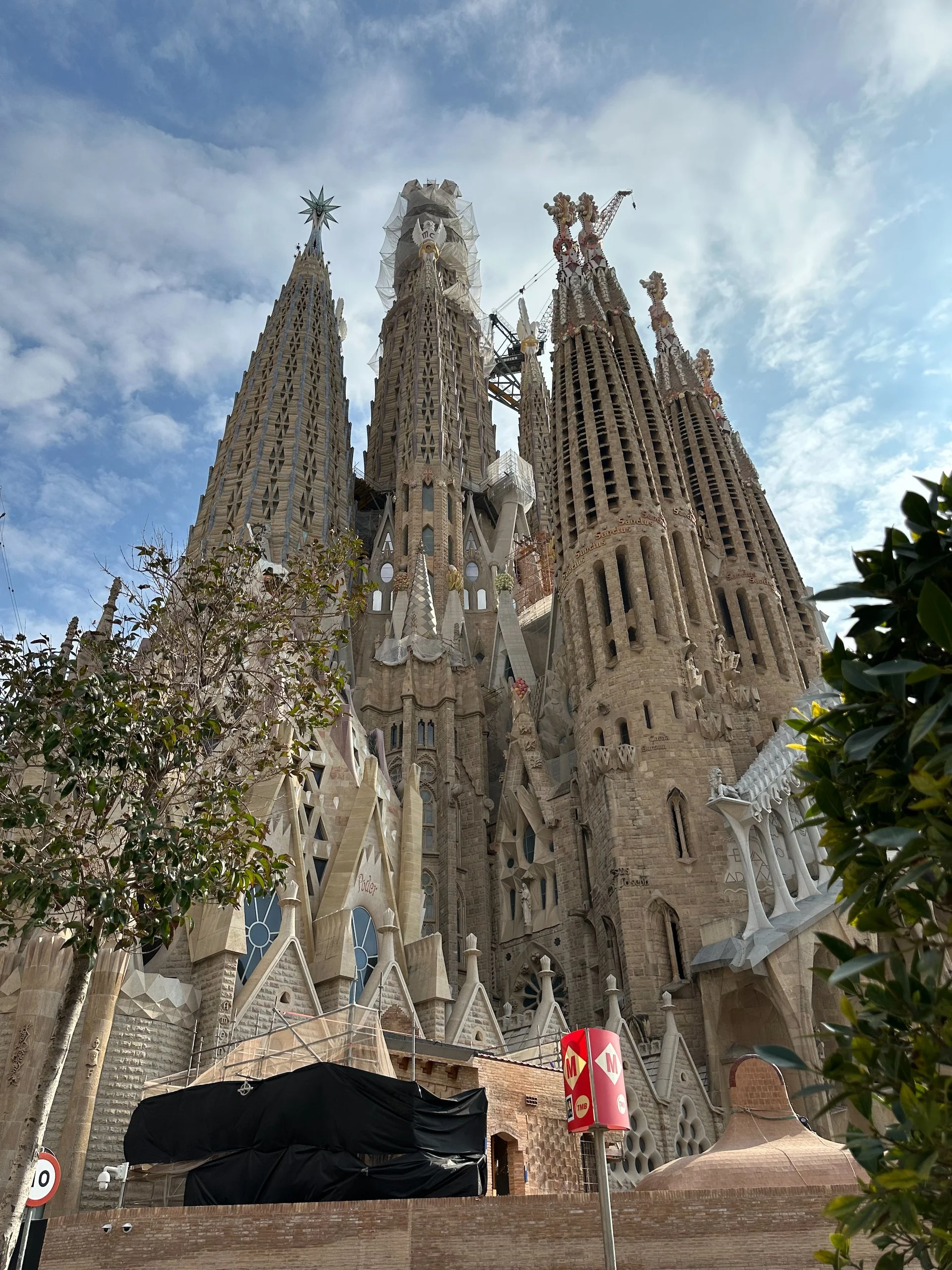
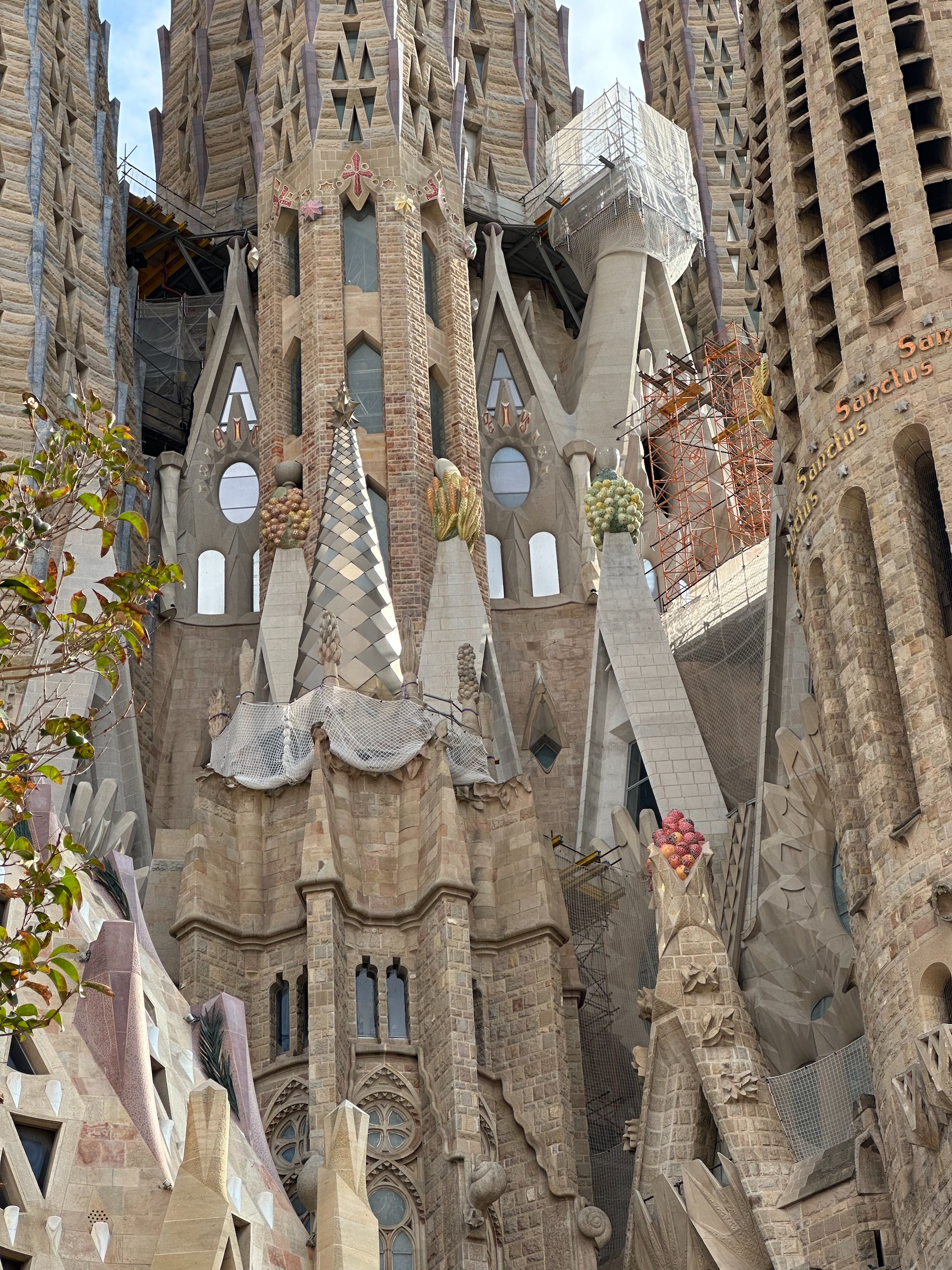
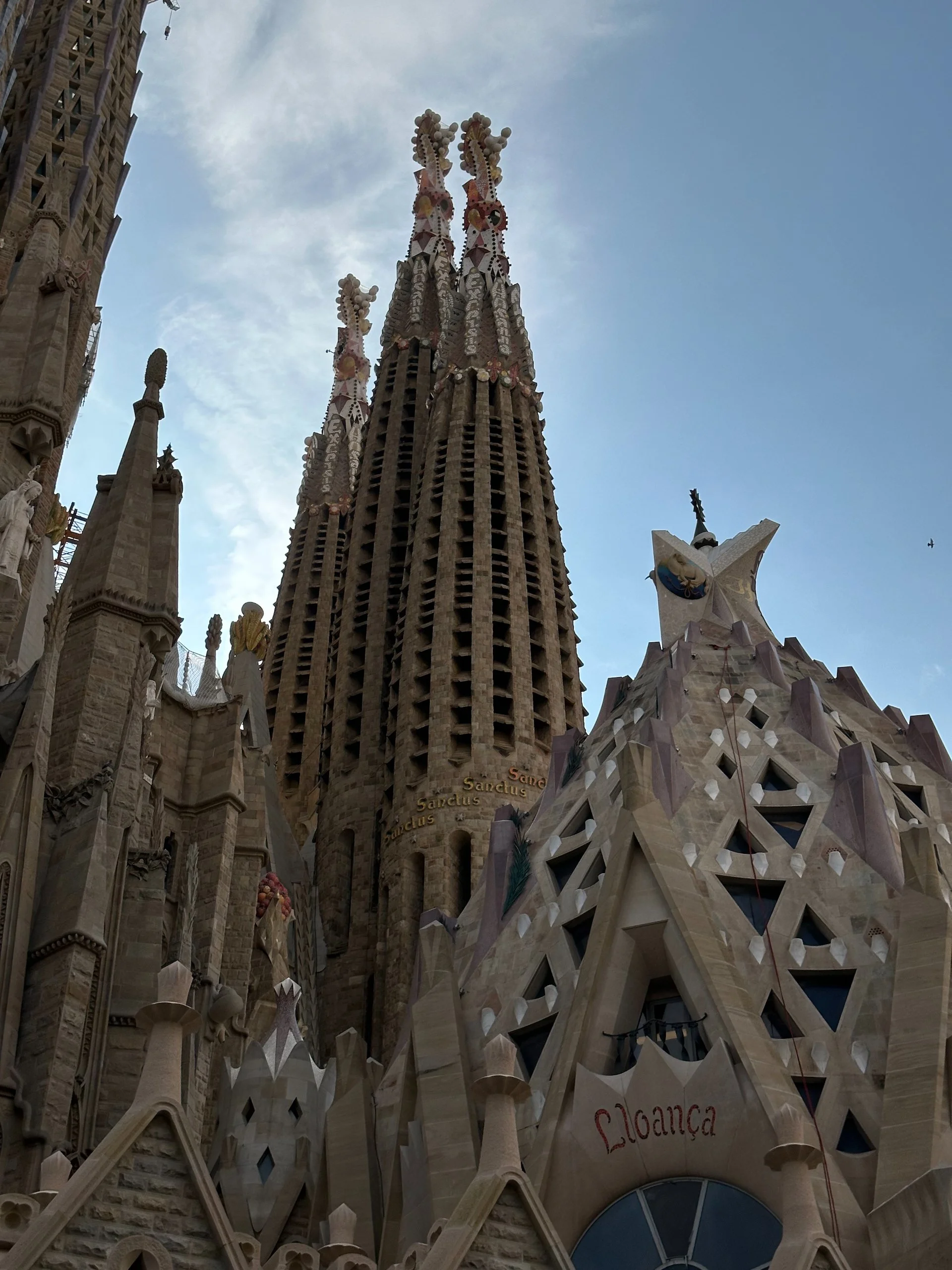
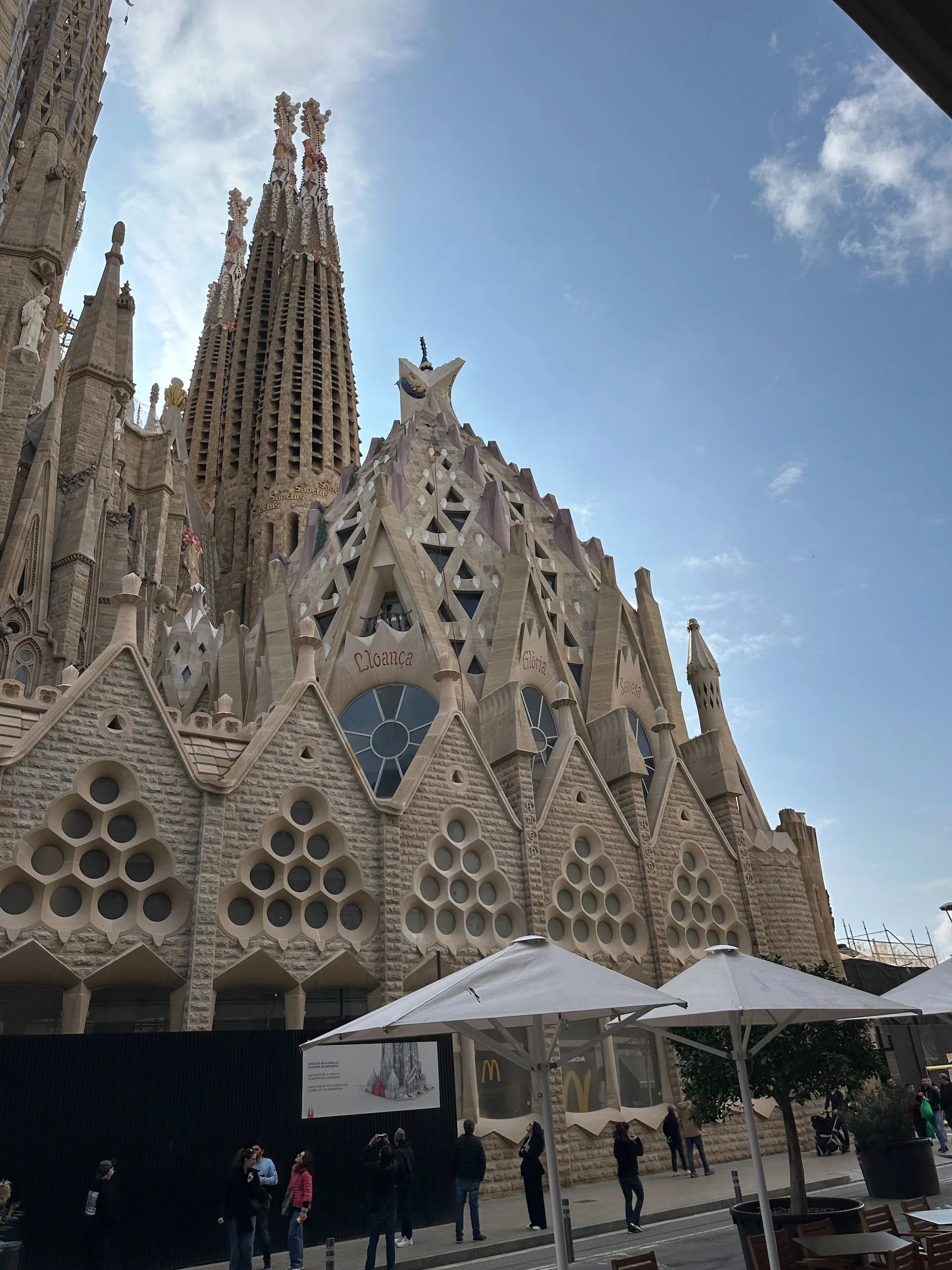
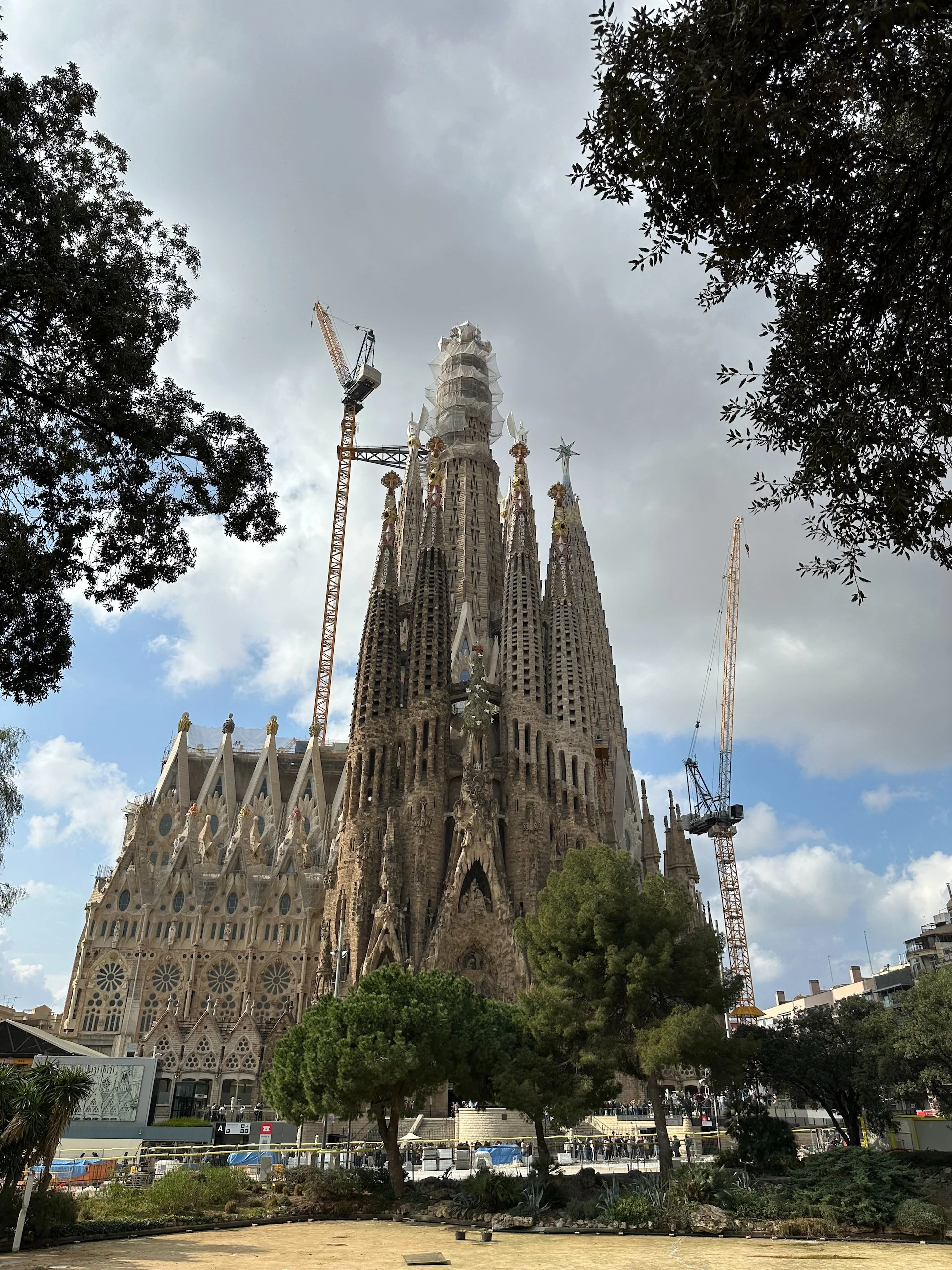
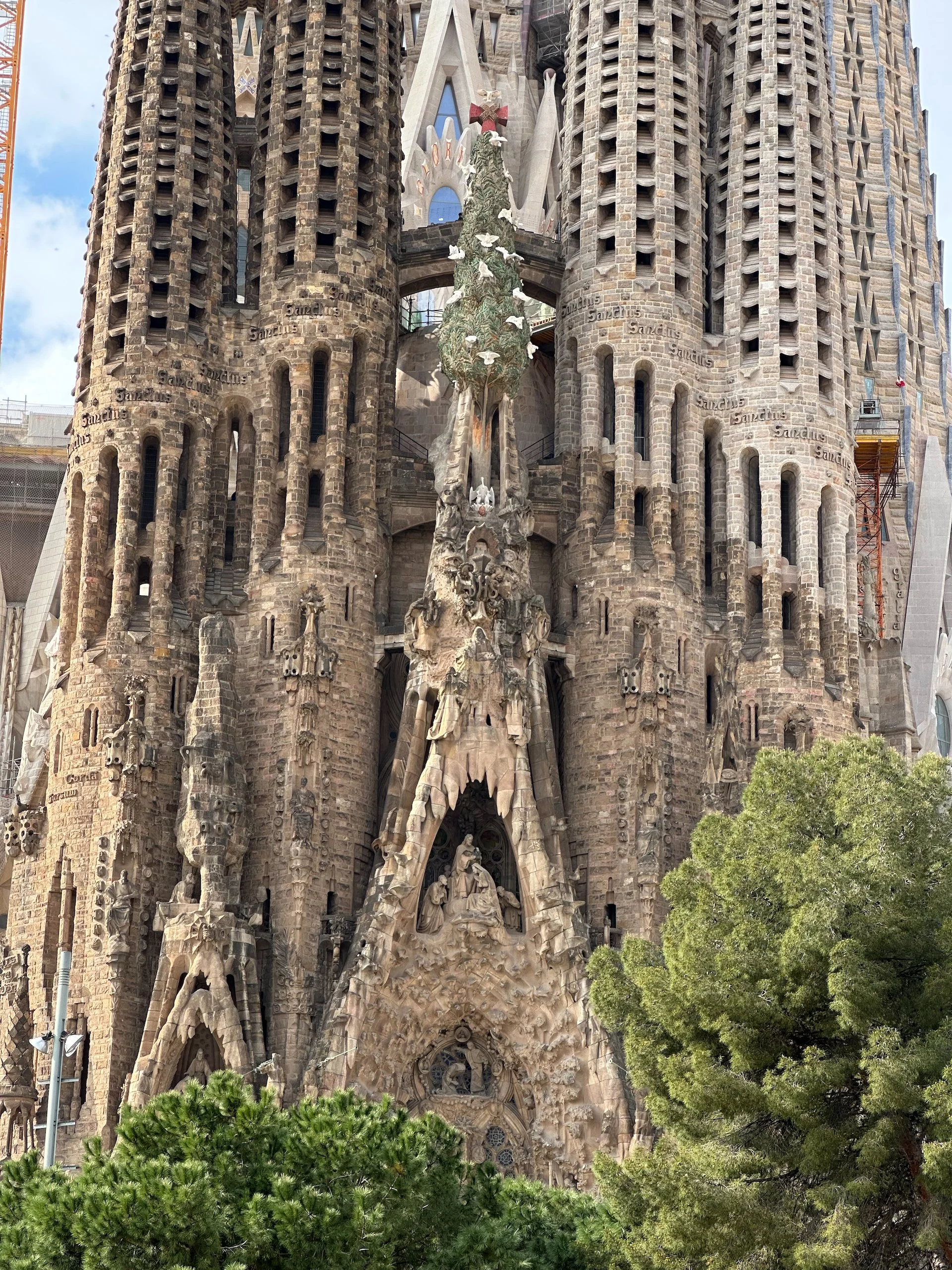
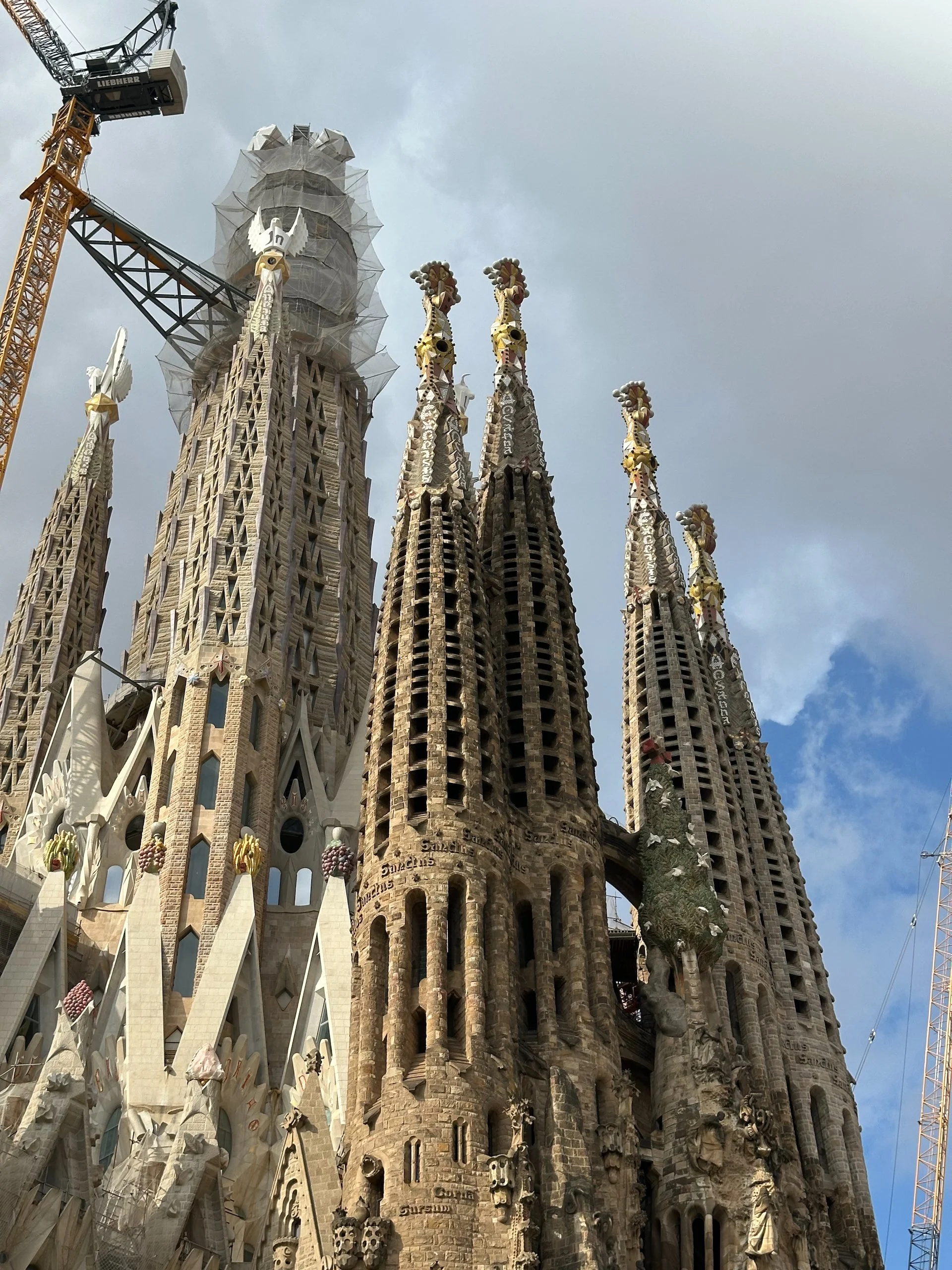
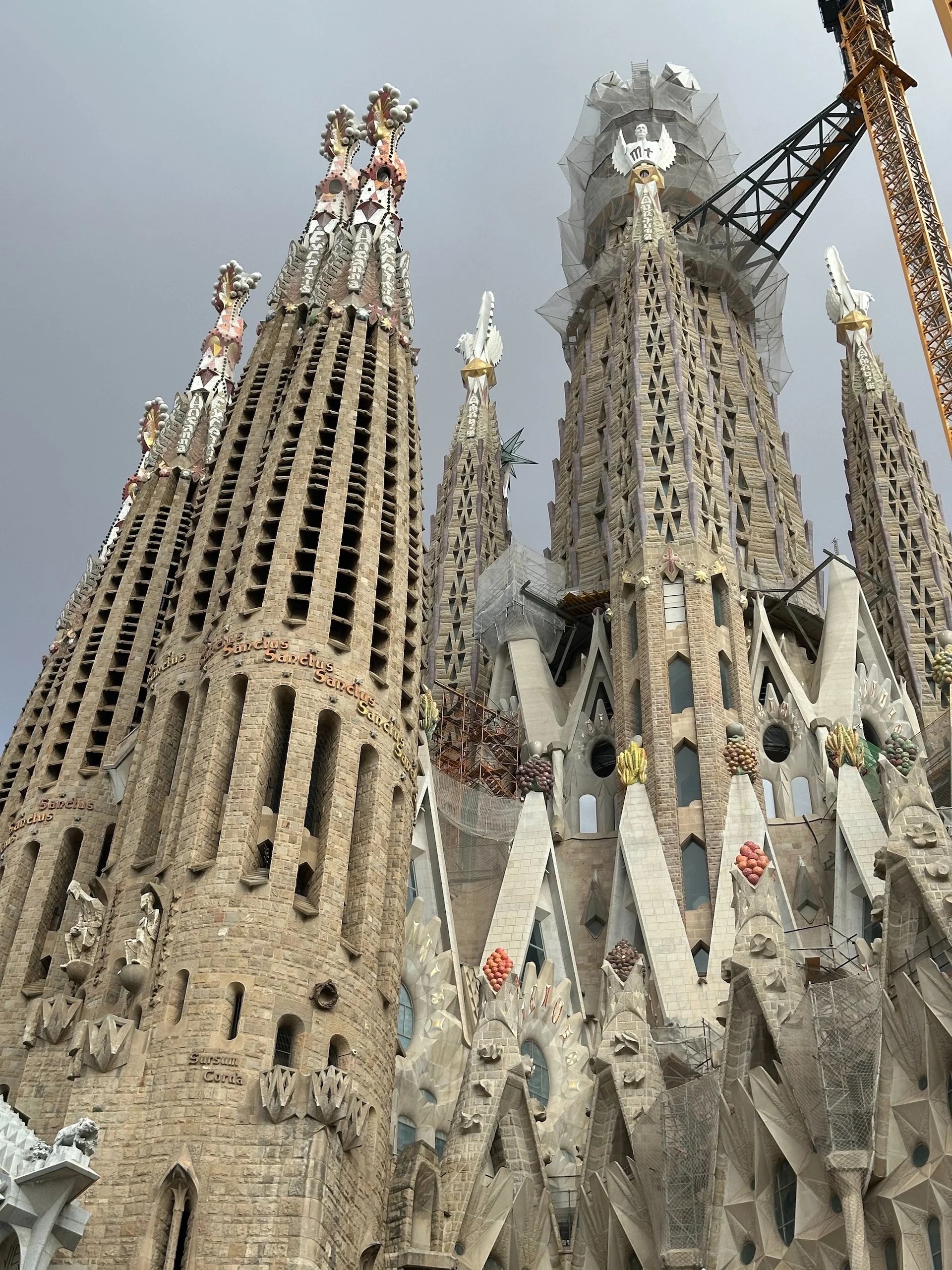
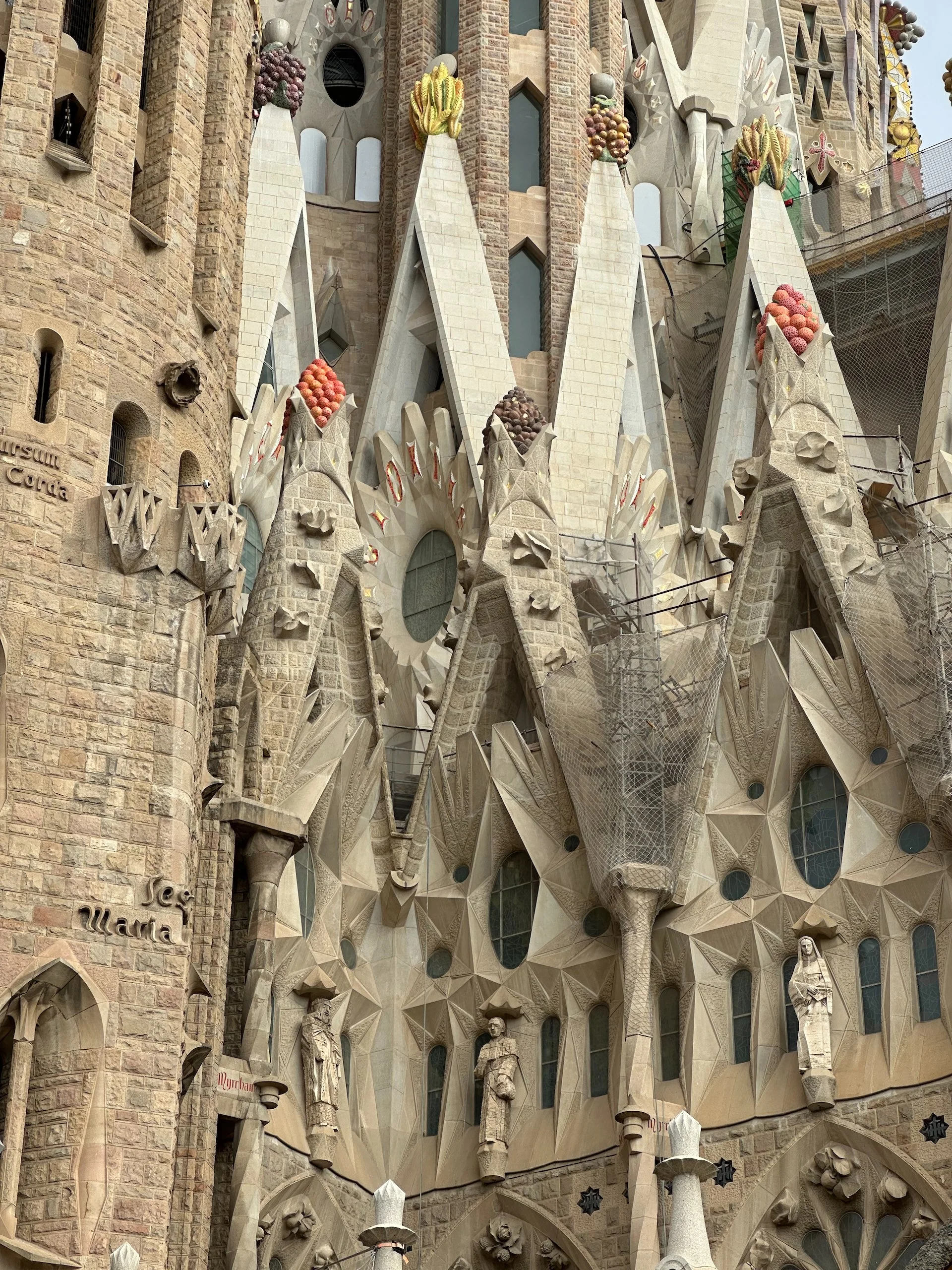
I would have loved to go inside, but same day tickets are not a thing, so I had to be content with the external views. I did a complete circuit, checking out this amazing building from all sides. You could see where they were still doing work on the facade, but it was certainly a lot more complete than the last time I was here. After spending a good hour, I continued my walking tour. It was a beautiful day - sunny but not too warm. Perfect for walking.
Casa Milà - once again I neglected to think about tickets to get inside and check it out.
My impromptu tour led me back towards the main street and a couple more of Gaudi’s famous buildings. My next stop was La Pedrera (the "Stone Quarry"), or more commonly Casa Milà. This was the final private residence designed by Antoni Gaudí before he dedicated his life to the Sagrada Família. Completed in 1912, this UNESCO World Heritage site is famous for its massive, undulating stone facade that looks more like a natural cliffside than a city apartment block.
Gaudí broke all the rules here. The building has no load-bearing walls; instead, it uses a revolutionary system of steel beams and stone columns, allowing for an "open plan" interior where every room is flooded with natural light from two enormous courtyards.
The highlight for most visitors is the Warrior Rooftop. The terrace is a surreal landscape of winding paths and ventilation towers shaped like medieval knights or "sentinels." These chimneys are so iconic they are rumored to have inspired the design of the Stormtrooper helmets in Star Wars.I do love the balconies with their intricate wrought iron details.
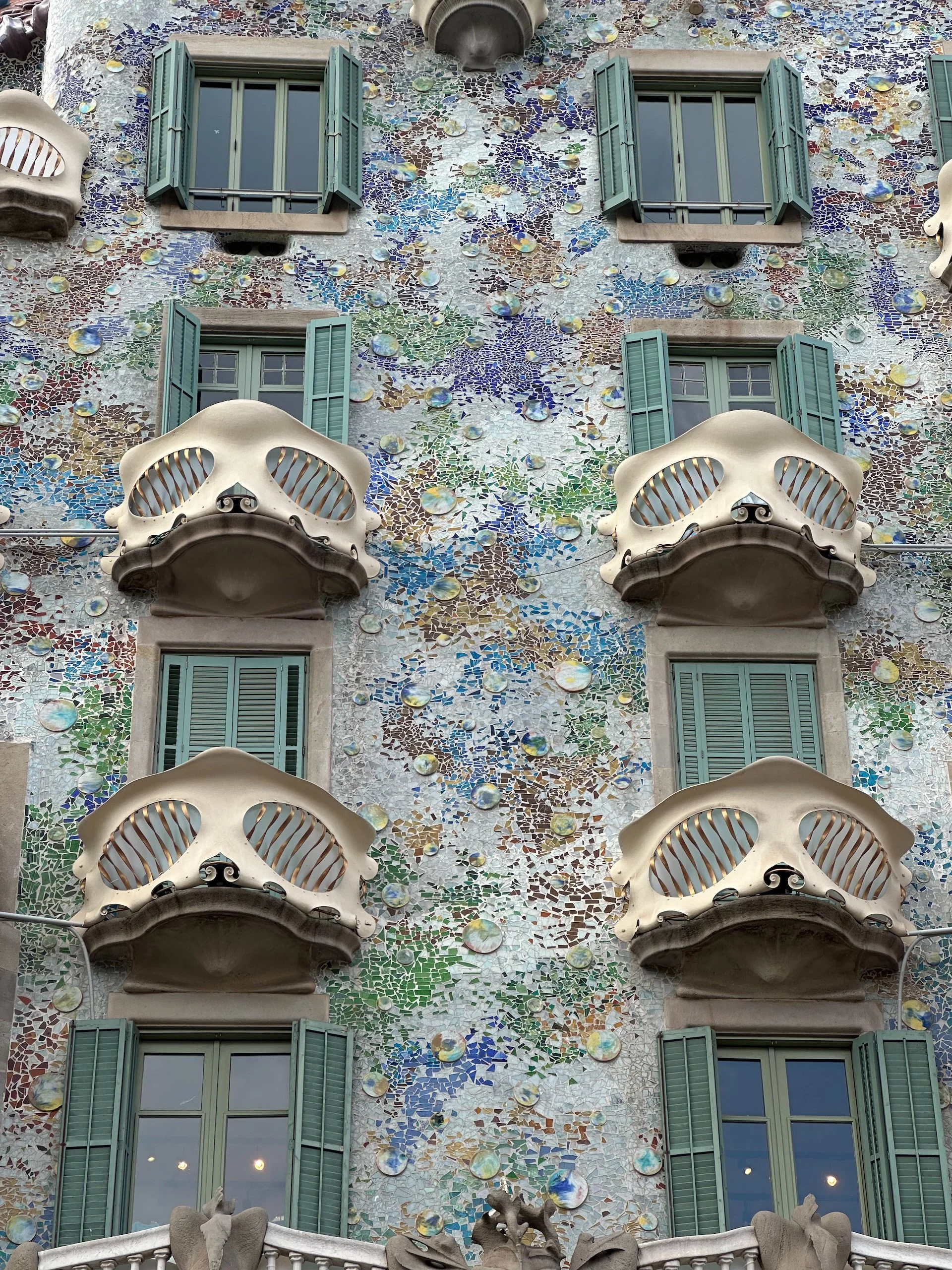
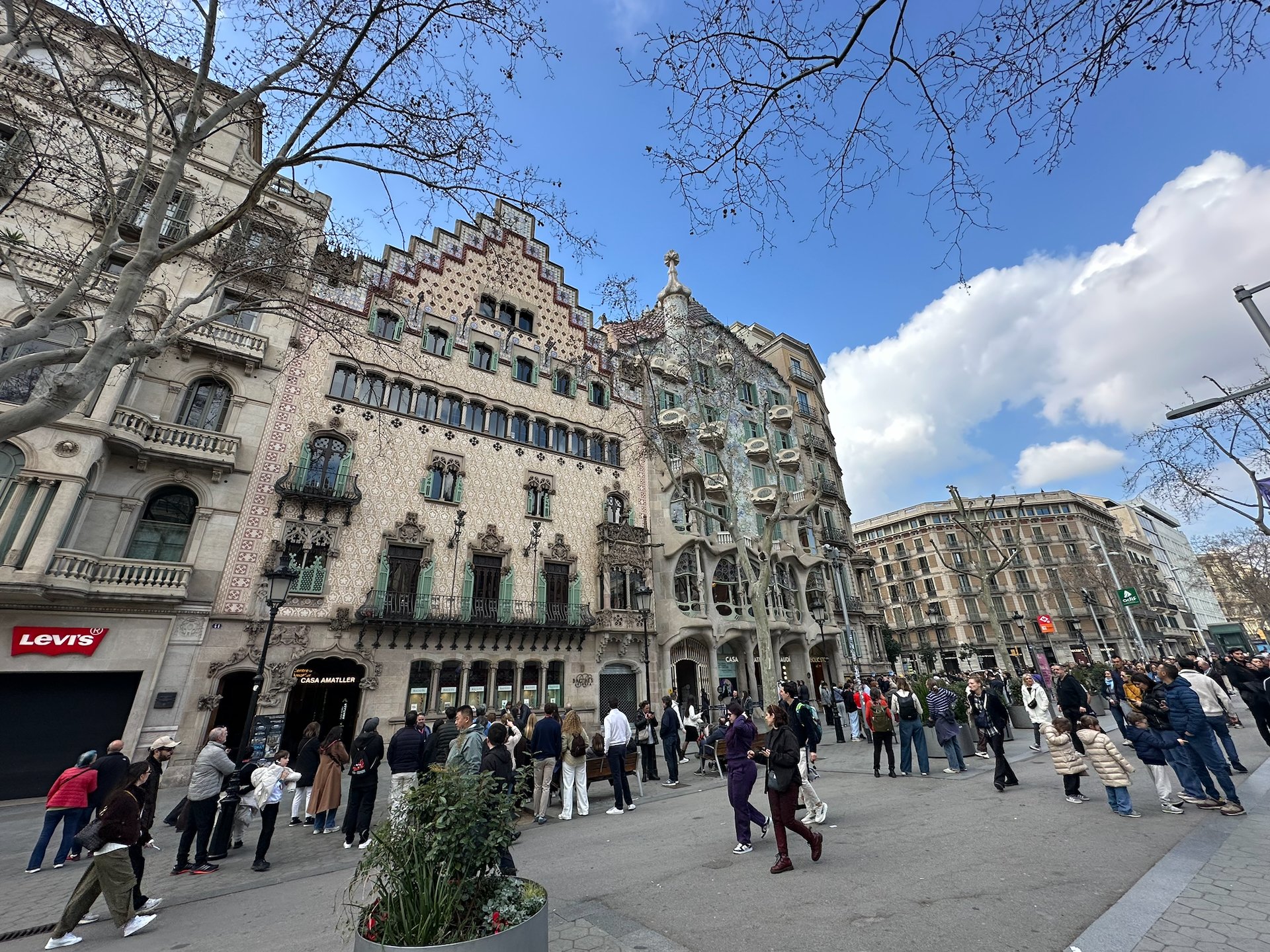
After having a look at the building, I continued the 5 minutes or so down the street to Casa Batlló, the building that I had seen the night before after dinner. It’s just as spectacular (maybe more) in the daylight.
Casa Batlló is a building that looks less like a residence and more like a hallucinogenic dream. Locally known as Casa dels Ossos (House of Bones), this 1904 remodel is Antoni Gaudí’s ultimate tribute to nature, marine life, and Catalan legend.
The facade is a vibrant masterpiece covered in trencadís—a mosaic of broken ceramic tiles that shimmer like fish scales in the Mediterranean sun. The "Bones", the skeletal balconies look like masks or skulls, while the slender stone columns on the lower floors resemble human limbs. The roof is the building's most famous feature. Its undulating spine of iridescent tiles represents the back of the dragon slain by Saint George, the patron saint of Catalonia. The four-armed cross on the roof symbolizes the hilt of the sword plunged into the beast. Inside, the "Light Well" uses a gradient of blue tiles to distribute sunlight evenly, creating the sensation of being underwater. Again, no tickets to go inside so I can only share photos from the outside.
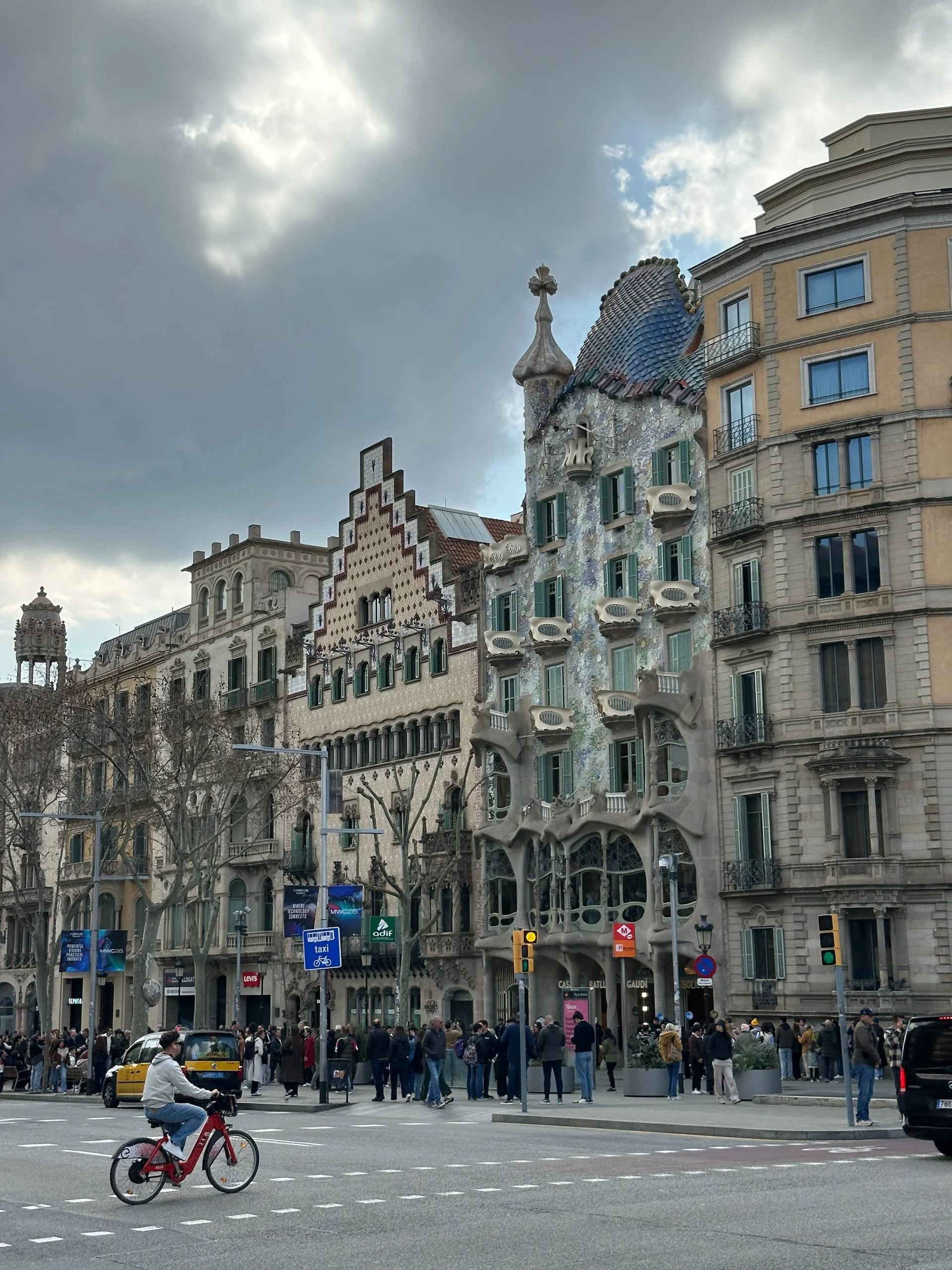
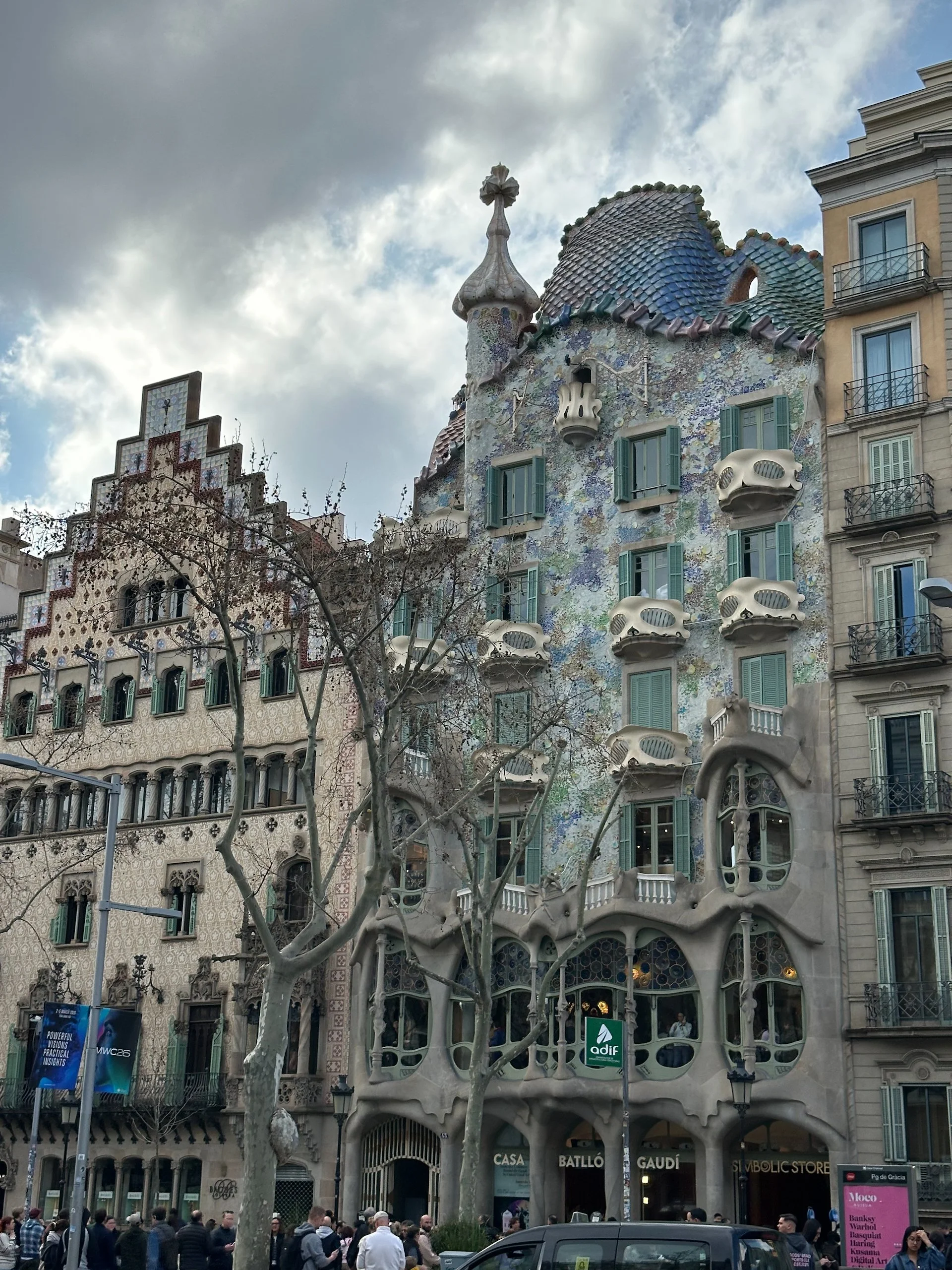
Brunch was pretty great, and I needed to have a short rest before continuing to explore.
After checking out this wonderful building, my wanderings started to take me down towards the old Gothic Quarter - my favorite are of the city. It was already after 1:00 p.m. and I was getting hungry, so along the way I found a great looking little restaurant that was serving brunch. So I stopped in to refuel.
The restaurant was close to La Ramblas so I cut over and walked down this historic street. La Ramblas is normally Barcelona’s sensory-rich spine, a 1.2-kilometer pedestrian boulevard connecting Plaça de Catalunya to the sea. Typically it is lined with flower stalls, street performers, and the legendary Boqueria Market, it’s a chaotic, vibrant mix of local history and tourist spectacle. And I say “normally” and “typically” as it was none of those things now - it was all ripped up and being completely renovated. It looked like they were redoing water and/or sewers under the road and re-installing all new stone. So there was not a lot to see - but I walked it anyway.
This led me to the Gothis Quarter. The Gothic Quarter is the historic heart of Barcelona, a labyrinth of narrow medieval streets opening into grand plazas. Centered around the Barcelona Cathedral, this atmospheric neighborhood blends Roman ruins with 14th-century Gothic architecture. It is a premier destination for discovering hidden artisan shops, lively tapas bars, and the city’s ancient soul.I even found a brewery to take a short break and try out the beer -they were excellent!
I had a flight which I really enjoyed.
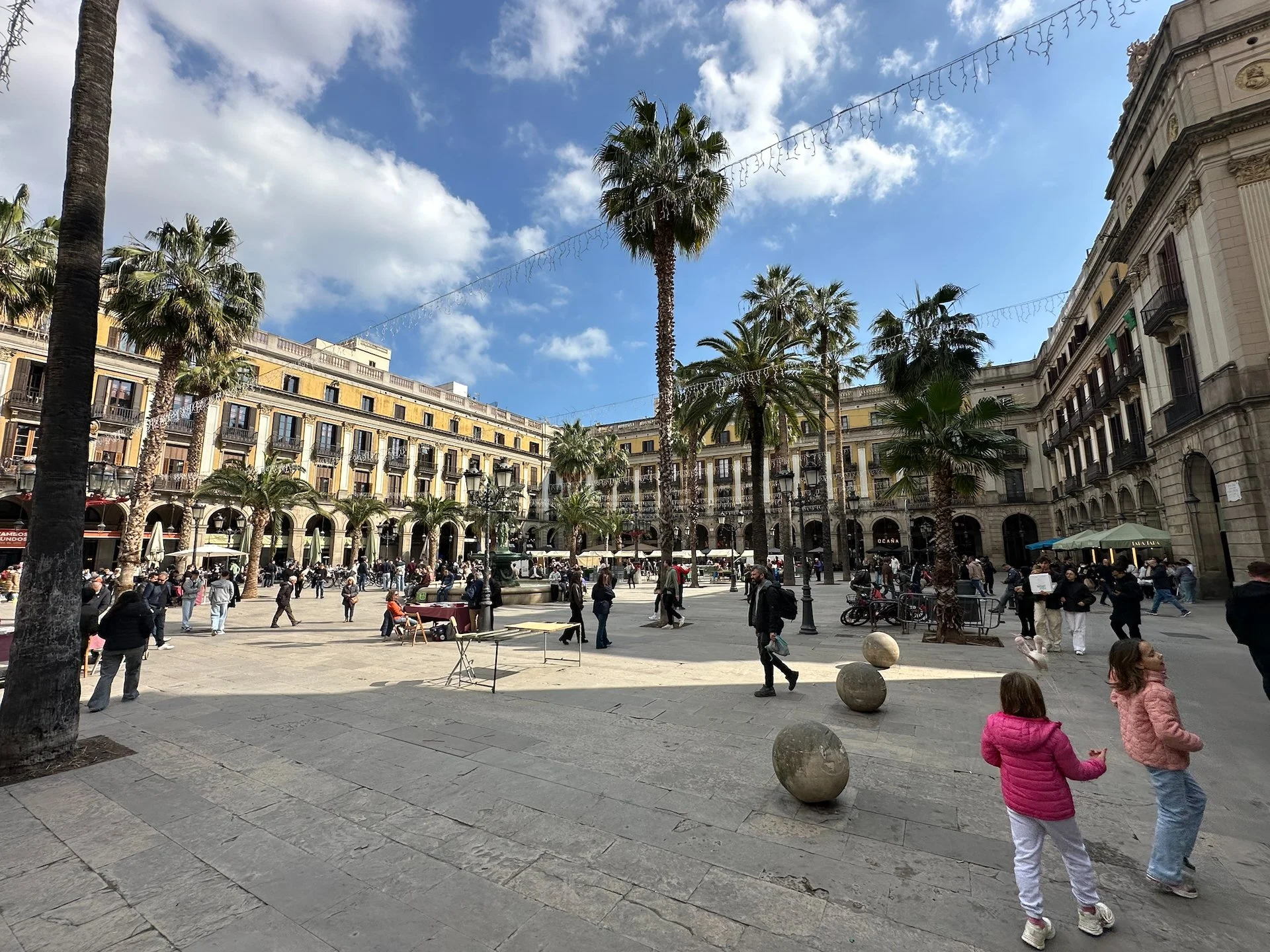
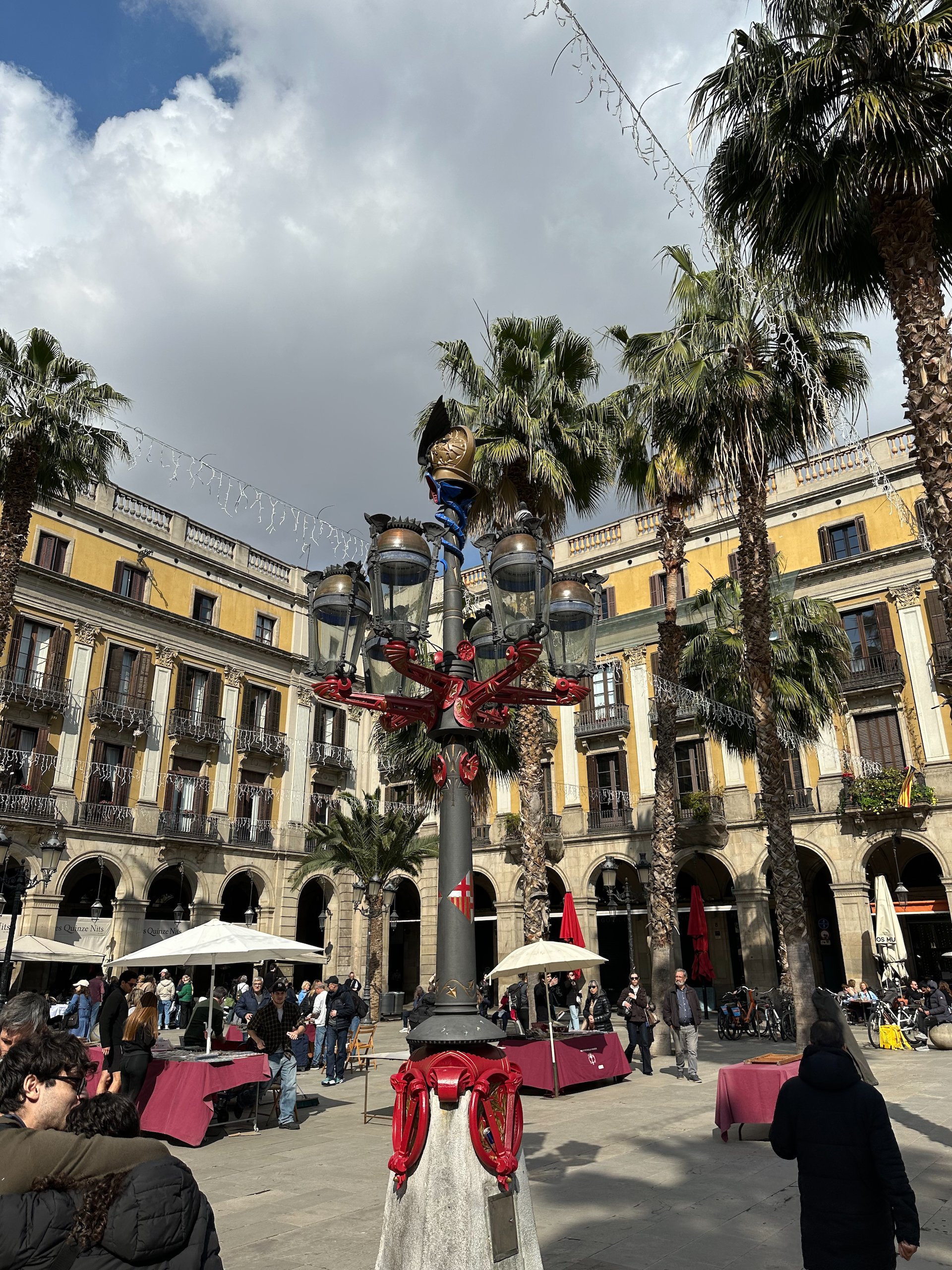
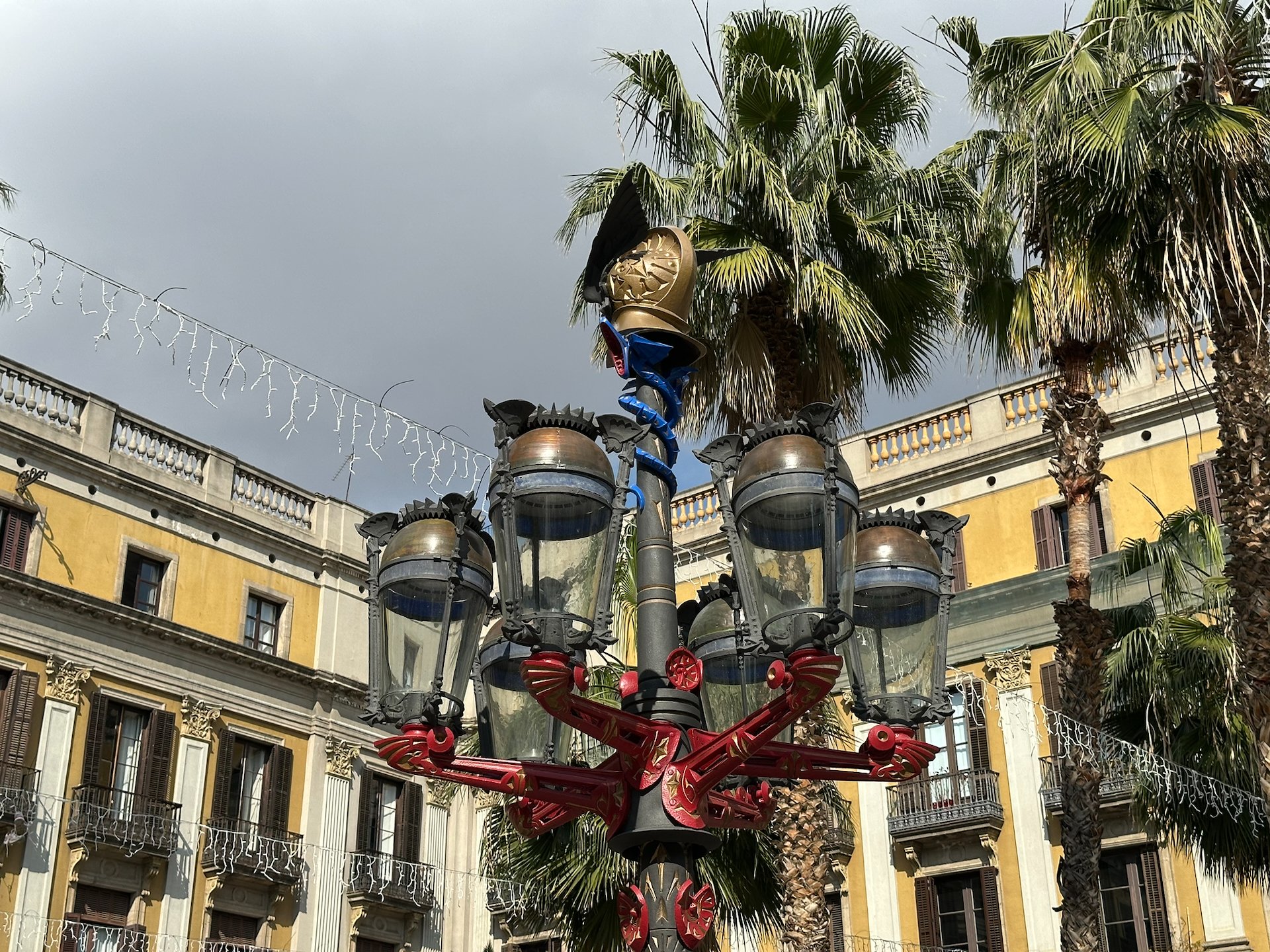
Nearby were my two last Gaudi stops. The first was this nice, but not very memorable square that was the start to Gaudí’s professional journey. It began in 1878 with a surprisingly humble commission: streetlights. Located in Plaça Reial and Pla de Palau, these cast-iron masterpieces were his first official works for the city. The designs were of intricate bronze detailing on a sturdy stone base, and are topped with a winged helmets and snakes, representing Mercury (the god of commerce). They prove that even a lamp post can be a high-art statement. At just 26, Gaudí was already ensuring that in Barcelona, even the infrastructure was spectacular.
My last Gaudi stop was just off La Rambla, at Palau Güell. It is an early Gaudí masterpiece built for his patron, Eusebi Güell. This urban mansion features innovative parabolic arches, a magnificent central hall with a starlit dome, and a surreal rooftop adorned with 20 colorful, mosaic-covered chimneys. It’s a dark, and tucked away down a side street - and there was a huge line to go inside. So I continued on my way.
This is just a random photo of a street in Barcelona, but it’s typical of the urban landscape, and why I love Barcelona.
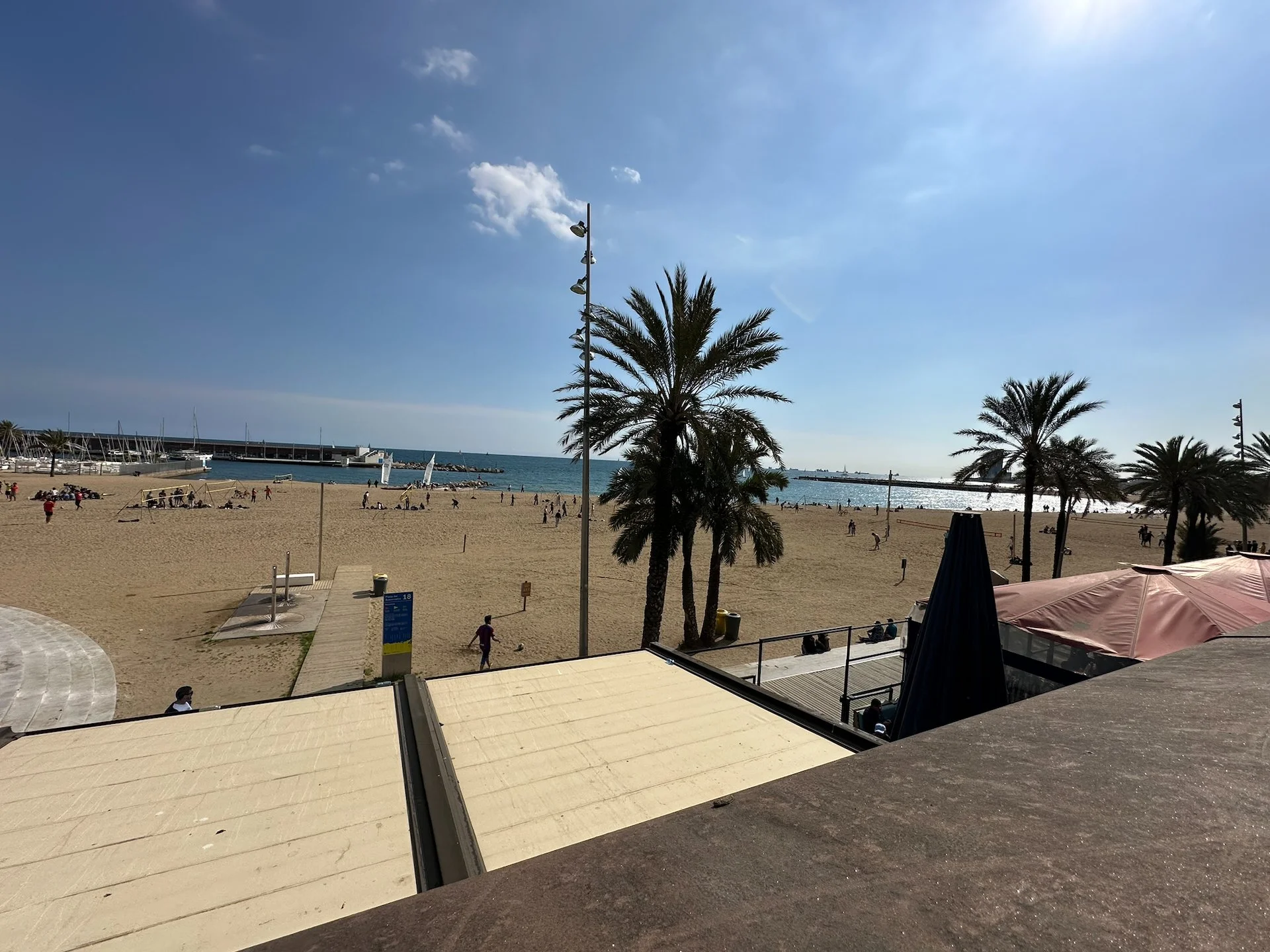
My walk then took me down to the ocean side where I wandered along and out towards the city beaches. It wasn;t the right time of year - a little too cold for swimming, even in the Med - but it was still nice to enjoy the sunshine, smell the sea area and relax a bit. I had a very busy week ahead of me.
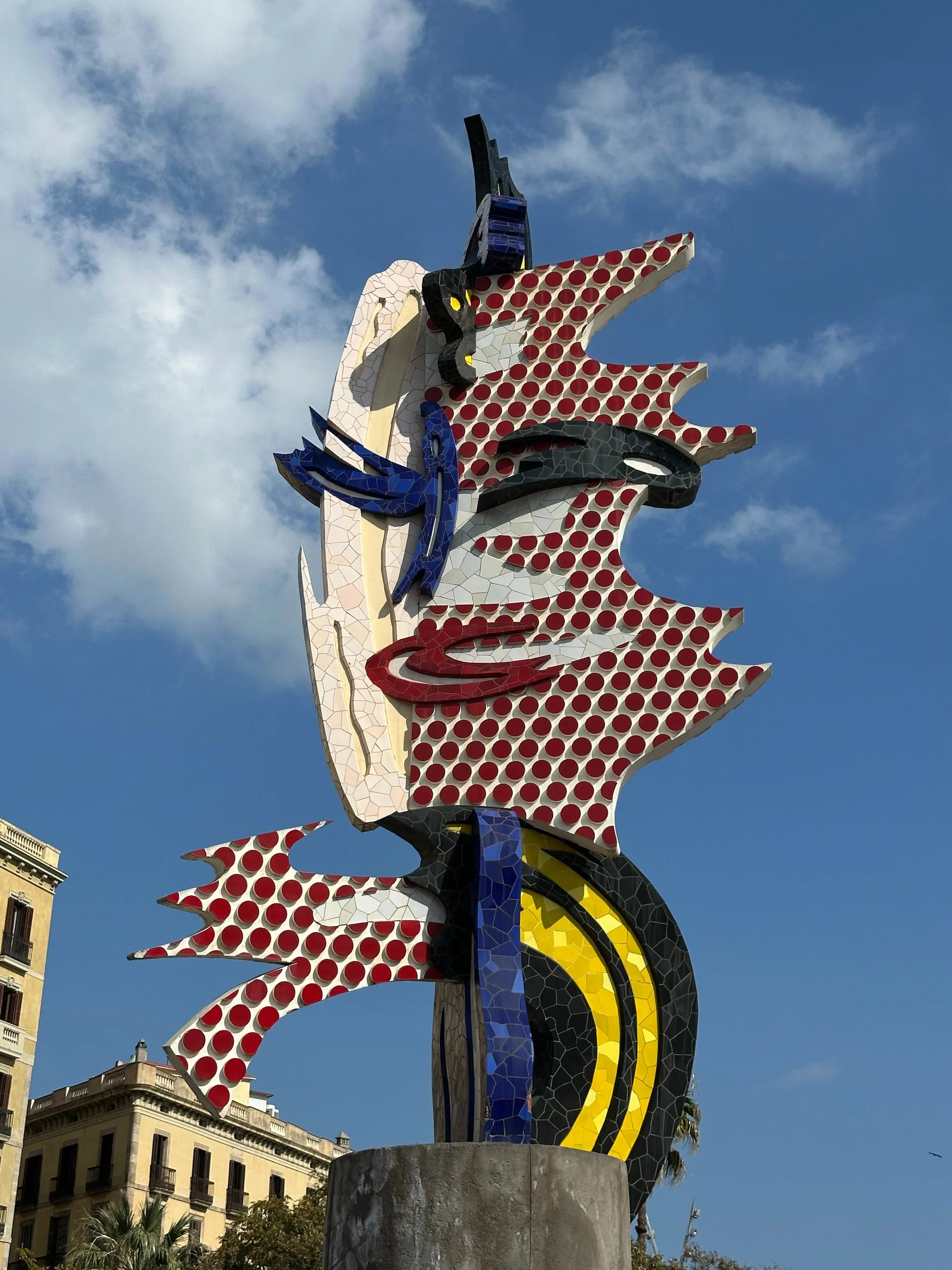
At that point I needed to head back to the hotel to get myself sorted for the evening ahead. I had an event that was associated with a company that I was hoping to partner with, and then I was hoping to catch up with my friend Dave, who was also in town for MWC.
I was originally going to do this as one post, but I think it’s getting a bit out of hand. Maybe I will break it there and publish and do a separate post for the rest of the week.